The Mubadala Arena in Abu Dhabi was packed and loud on the evening of 28 October 2018, but for Israeli judo the noise that mattered was the one nobody was sure would come: the opening bars of Hatikvah, played over a Gulf sound system for an Israeli gold medallist for the first time in history.
It had not been that way twelve months earlier. At the same Abu Dhabi Grand Slam in October 2017, Tal Flicker won gold in the men's under-66kg category, but tournament organisers refused to raise the Israeli flag or play its anthem, citing the UAE's lack of diplomatic ties with Israel. Instead, the International Judo Federation's own flag and anthem were used on the podium — while Flicker, standing beneath them, quietly sang Hatikvah to himself.
The episode drew international attention and formal censure. In July 2018 the IJF's executive committee suspended both the Abu Dhabi Grand Slam and the Tunis Grand Prix, declaring it would not sanction events until organisers guaranteed equal treatment — flags, anthems and all — for every competing nation. The federation framed it as a stand against discrimination in sport, and it worked: the UAE government provided the guarantees, and the Abu Dhabi Grand Slam returned to the calendar that autumn with Israeli symbols permitted for the first time.
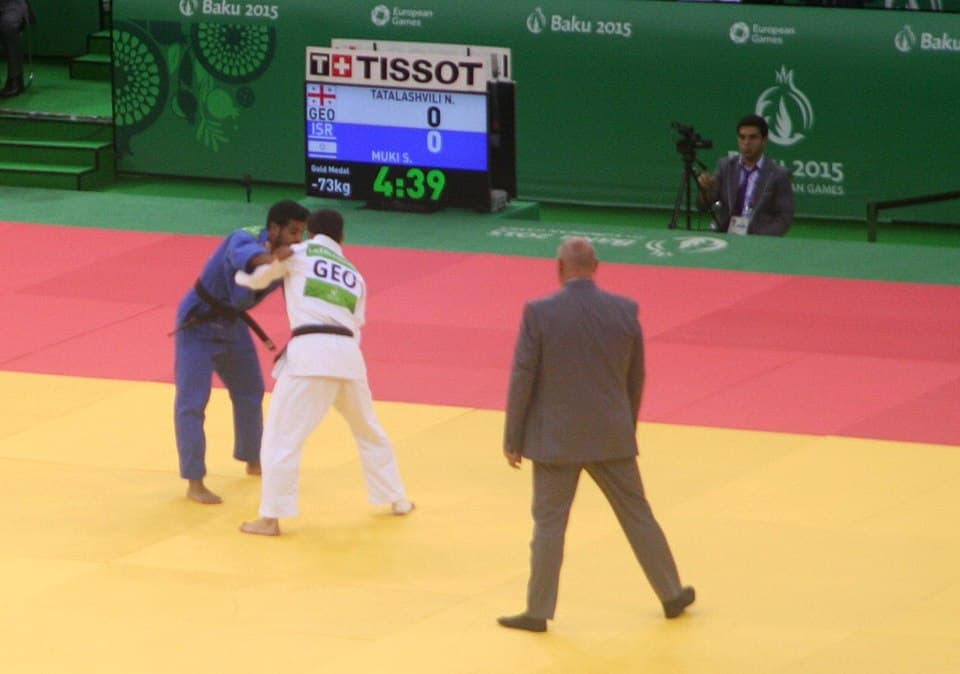
Into that reopened arena stepped Sagi Muki, competing in the men's half-middleweight (-81kg) division. His route to the final was hard-fought, and the final itself, against Belgium's Matthias Casse, tighter still: Muki picked up two shido penalties and came within one more of disqualification before the bout went to golden score. There, he threw Casse for the score that settled it, and the gold medal was his.
What followed was the historic part. As Muki stood on the podium, the Israeli flag was raised over the arena and, for the first time in the country's sporting history, Hatikvah was played inside the United Arab Emirates. Israel's Minister of Culture and Sport, Miri Regev, who had travelled to Abu Dhabi with the delegation, was visibly emotional as she sang along from the stands.
Coverage of the moment spread quickly through Israeli and international media — a judo mat, of all places, had become the setting for a small but unmistakable diplomatic marker, two years before the Abraham Accords formally opened relations between Israel and the UAE.
Muki's career did not stop there. Less than a year later, at the 2019 World Judo Championships in Tokyo, he met Casse again — this time in the world final — and beat him once more, becoming the first Israeli man to win a judo world title.
The Abu Dhabi ban and its reversal remain a small but telling chapter in Israeli sport: proof that a single bout, and a single anthem finally allowed to play, could carry weight far beyond the scoreboard.