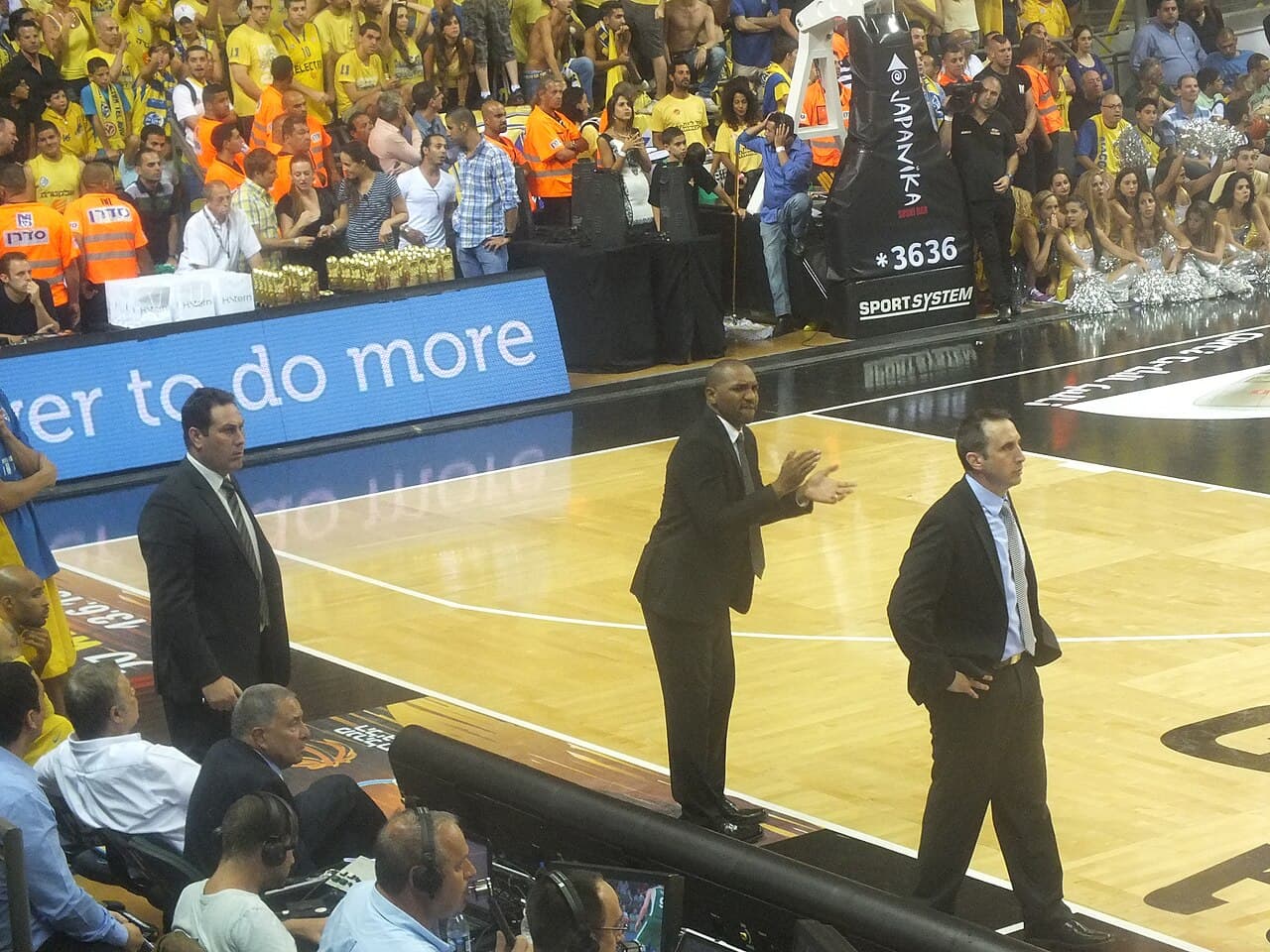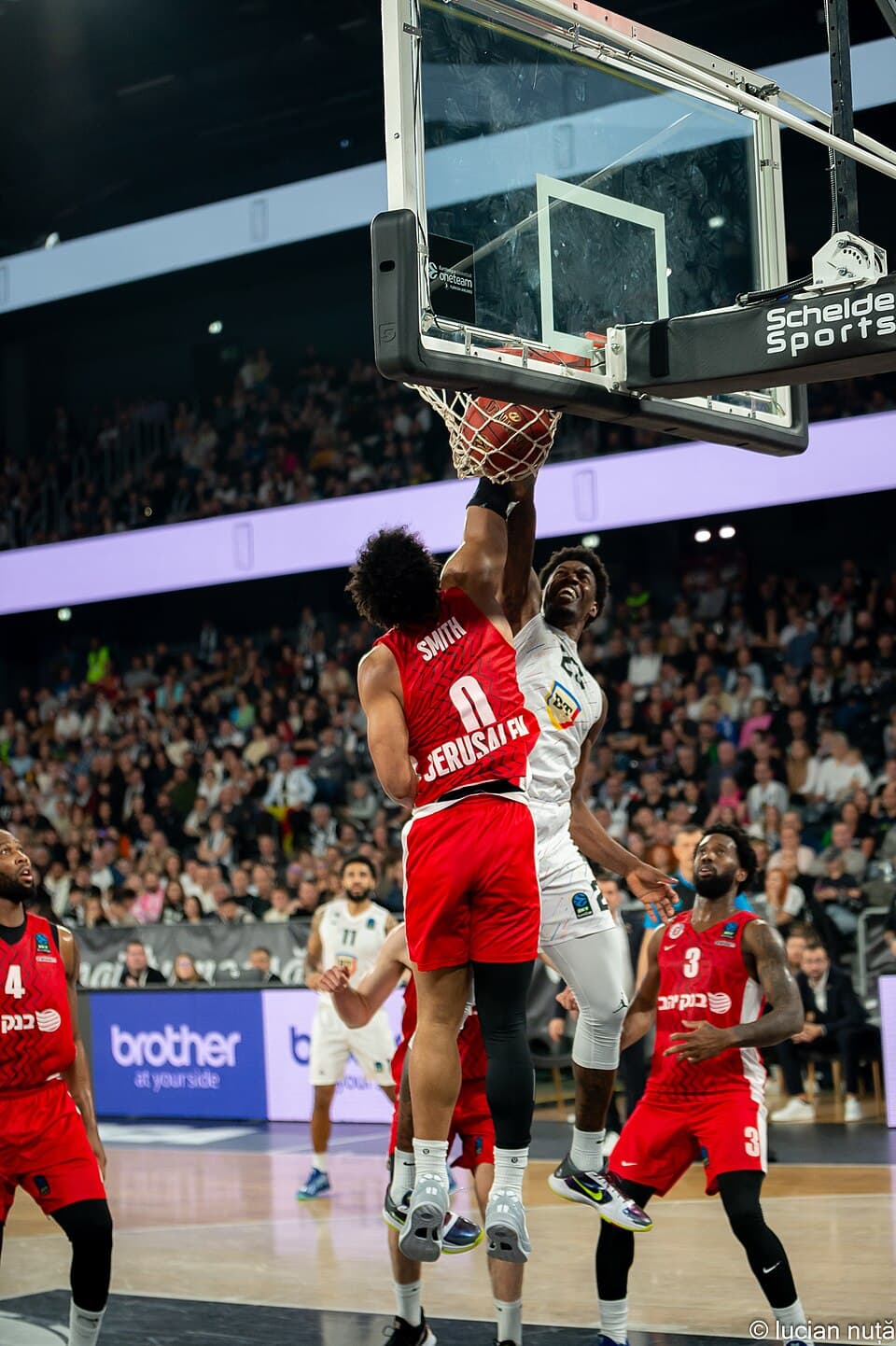
A quarrel that has simmered in Israeli basketball since Khadeen Carrington first pulled on a national team jersey is heading for a formal reckoning, with ONE reporting that two of the league's most powerful club chairmen want naturalized internationals frozen out of domestic status for years after they take an Israeli passport.
Shimon Mizrahi, the long-serving chairman of Maccabi Tel Aviv, and Eldad Akunis, who heads Bnei Herzliya, are pushing for a cooling-off period of two to three years between a foreign player's naturalization for the national team and his eligibility to be registered as an Israeli, rather than a foreign import, in the domestic league.
The demand is aimed squarely at closing what the two chairmen regard as a loophole first exposed by Carrington's case. The guard, a Trinidadian-American who arrived at Hapoel Jerusalem in 2022, became the first player in the country's history to be naturalized specifically so he could represent the Israeli national team.
Once his citizenship came through, Carrington was registered in the league not as one of Hapoel Jerusalem's quota of foreign players but as a domestic Israeli, freeing up an import slot for the club and, in the eyes of rival executives, handing it a competitive edge that had nothing to do with what happened on court.
According to ONE, the proposal now on the table would prevent any future naturalized player from being counted as Israeli in league play until he has either completed two full cycles in the national team's colors or three years have passed since his citizenship was approved.
The dispute has already gone before arbitration. Retired judge Oded Modrik, acting as arbitrator, has ruled that any such change to the rules requires the written agreement of all 14 clubs in Israel's top flight, with a deadline of August 31, 2026 for that unanimous sign-off to be secured.
That threshold gives every club, including Hapoel Jerusalem, effective veto power over a rule that would directly affect how it uses Carrington and any future naturalized signing. Getting fourteen ownership groups to agree on anything in Israeli basketball is rarely straightforward.
The Israel Basketball Association, now chaired by Amos Frishman, has separately set up a naturalization committee tasked with drafting clearer guidelines for how foreign players are fast-tracked to citizenship for national team purposes, and how their status is then treated back in the league.
The underlying tension is familiar to anyone who has followed Israeli basketball's repeated attempts to bolster the national team: the federation and Interior Ministry have leaned on naturalization to strengthen the side for EuroBasket and World Cup qualifying campaigns, while club owners worry about the knock-on effects for league competitive balance.
Whether the August deadline produces a unanimous agreement, or simply hardens the standoff between clubs that benefit from naturalized talent and those that do not, is likely to shape how Israeli basketball handles its next naturalization case.