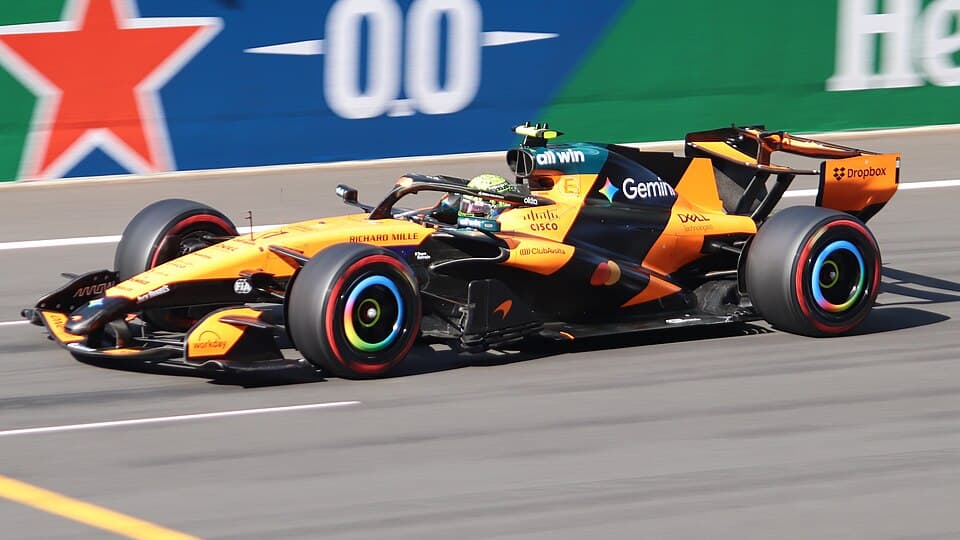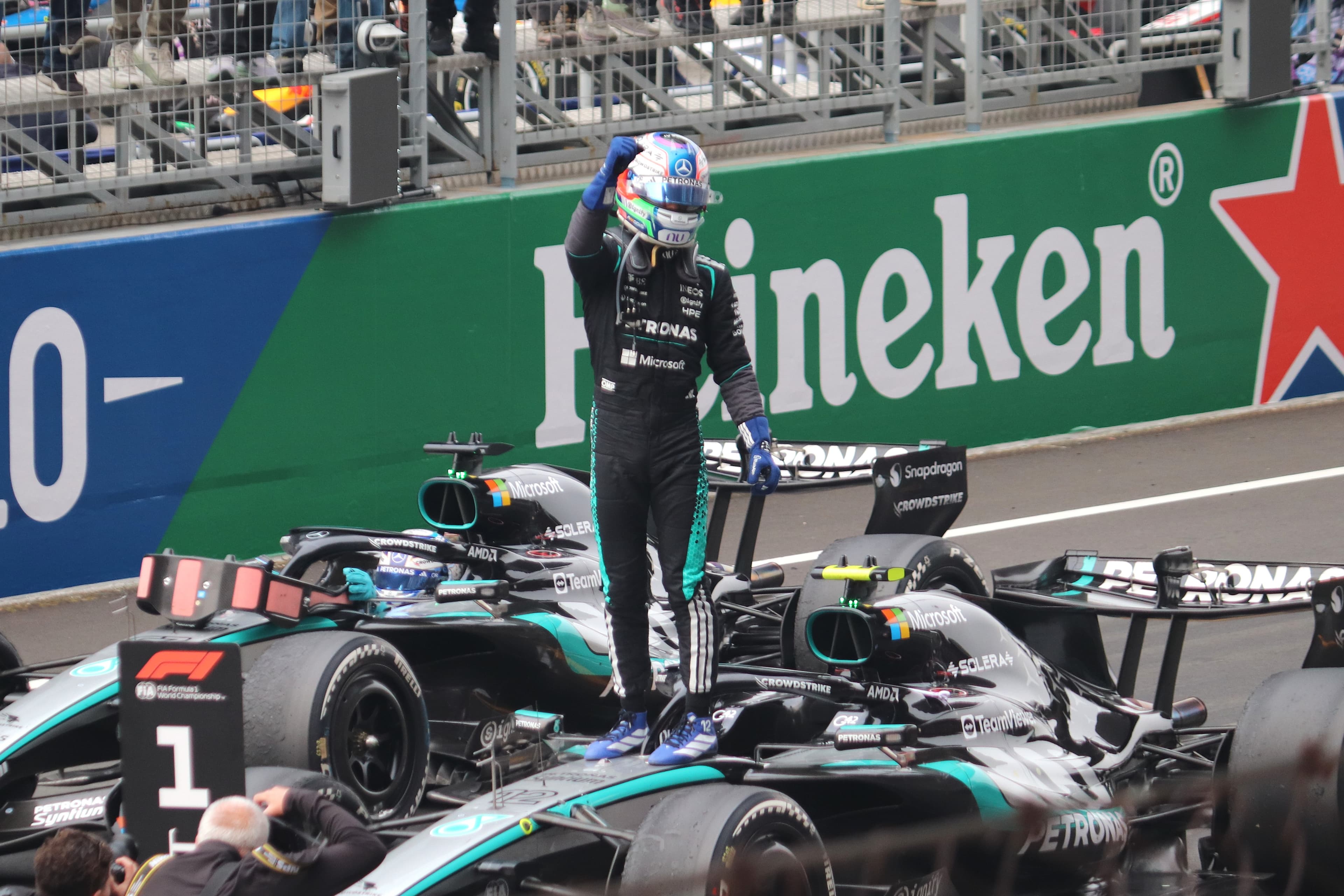
Formula 1 arrives at Spa-Francorchamps on Friday with a championship that suddenly looks less settled. Kimi Antonelli still leads the drivers' standings, but George Russell has cut the gap between the Mercedes team-mates to 25 points. The Belgian Grand Prix is therefore more than the tenth round of the season — it is the first full test of how Antonelli responds after his Silverstone retirement turned a comfortable advantage into a live intra-team contest.
Silverstone altered the tone without overturning the order. Charles Leclerc won for Ferrari, Russell finished second and Lewis Hamilton completed the podium, while Antonelli failed to reach the flag. Russell did not need to beat his team-mate wheel to wheel to make the title race tighter; reliability did the work for him.
Spa now asks Mercedes to manage two competing interests: maximising another strong car, and allowing both drivers to pursue the same championship. The scale of the team's control so far this season remains easy to underestimate. Mercedes has won seven of the opening nine Grands Prix, with Russell taking Australia and Austria and Antonelli winning in China, Japan, Miami, Canada and Monaco.
Ferrari interrupted that run through Hamilton in Spain and Leclerc in Britain. Two victories in the last three rounds do not erase Mercedes' advantage, but they do mean its drivers can no longer treat every strategic decision as a private duel.
Spa is a particularly revealing place to test that balance. At 7.004 kilometres it is the longest circuit on the calendar, combining the flat-out climb through Eau Rouge and Raidillon with a technical middle sector and an extended run back towards the Bus Stop chicane. Teams need enough straight-line efficiency to attack or defend on the Kemmel Straight without leaving the car exposed through the faster corners, and the Ardennes weather adds another variable because conditions can differ across a lap that takes cars through several kilometres of forest.
The official programme gives teams three conventional practice sessions rather than a compressed sprint weekend. First practice starts at 11:30 local time on Friday, qualifying is scheduled for 14:00 on Saturday, and the 44-lap race begins at 13:00 on Sunday. For viewers in Israel, those sessions begin an hour later — 12:30, 15:00 and 14:00 respectively — with the full race distance set at 308.052 kilometres.
Ferrari's recent progress changes the strategic geometry. Leclerc's Silverstone victory was his first since 2024, and Hamilton's third place put both red cars on the podium. If that pace carries into Belgium, Mercedes cannot simply separate Antonelli and Russell with conservative tyre calls and collect the largest points total available — a credible Ferrari challenge creates undercut risks, forces quicker decisions and makes any preference between the two title contenders more visible.
Antonelli remains in the stronger position, since 25 points is the value of a Grand Prix victory. Russell, however, arrives with momentum and the knowledge that one retirement has already transformed the standings. Spa will not decide a championship with twelve rounds still to follow after Sunday, but it can reveal something just as important: whether Mercedes' season is still being controlled from the front, or has become a fight its two drivers must now manage in public.