The scoreboard read 78-77, the clock had run out, and Tal Brody was already hoisting the European Champions Cup over his head in Belgrade's Pionir Hall when he said the sentence Israelis have been repeating for almost fifty years: "We are on the map! And we are staying on the map — not only in sports, but in everything." It was 7 April 1977, and Maccabi Tel Aviv had just beaten the Italian champions Mobilgirgi Varese by a single point to win the country's first European club title in any team sport.
The road to that Belgrade final had run, improbably, through a small gymnasium in Belgium. Since the Six-Day War of 1967, the Soviet Union had severed diplomatic relations with Israel and thrown its political weight behind Israel's Arab neighbours. When the draw for the 1976-77 European Champions Cup semi-final group paired Maccabi Tel Aviv with the Soviet army club CSKA Moscow, neither government would permit the match on its own soil — Moscow refused to host the Israelis, and the Soviets refused to travel to Tel Aviv. FIBA settled on neutral ground: the border town of Virton, Belgium.
On 17 February 1977, in front of a crowd that Israeli newspapers gleefully described as an underdog's dream — a nation of some three and a half million against a Soviet superpower of nearly 260 million — Maccabi routed the heavily favoured CSKA side 91-79. Much of Israel watched on its single state-run television channel. The Belgian gym had become, for one night, the unlikely front line of a Cold War morality play, and Israel had won it.
The victory landed at a raw moment in Israeli life. Barely four years earlier, the Yom Kippur War had shaken the country's sense of security; not five years earlier, eleven members of the Israeli Olympic delegation had been murdered at the Munich Games. Tal Brody, the team's American-born captain, later said the team "took the country out of mourning" that winter. Whatever the scoreline, the CSKA upset carried a weight that went well beyond a basketball semi-final.
Two months on, Maccabi arrived in Belgrade for the final against Mobilgirgi Varese, the reigning Italian champions and clear favourites on paper. The team Ralph Klein had built blended homegrown talent with adopted sons: Brody, a former University of Illinois All-American who had turned down a shot at the NBA to build the game in Israel; Miki Berkovich, the sharp-shooting guard who would go on to a Hall of Fame career; and Aulcie Perry, the New Jersey-born centre who had arrived in Israel only the year before and would become one of the most beloved figures in the club's history.
The final itself was as tight as the season that preceded it. Maccabi held off Varese's late surge to win 78-77, sealing the club's first European Champions Cup — the forerunner of today's EuroLeague — in the competition's twentieth edition. It was, at the time, the single biggest achievement in Israeli international sport.
What has outlasted the score, though, is the line Brody delivered on the podium. "On the map, and staying on the map" became shorthand for a country insisting on its place in the world, quoted in political speeches, television commercials and school textbooks for decades afterward. Few sentences in Israeli sport have travelled as far from the court where they were spoken.
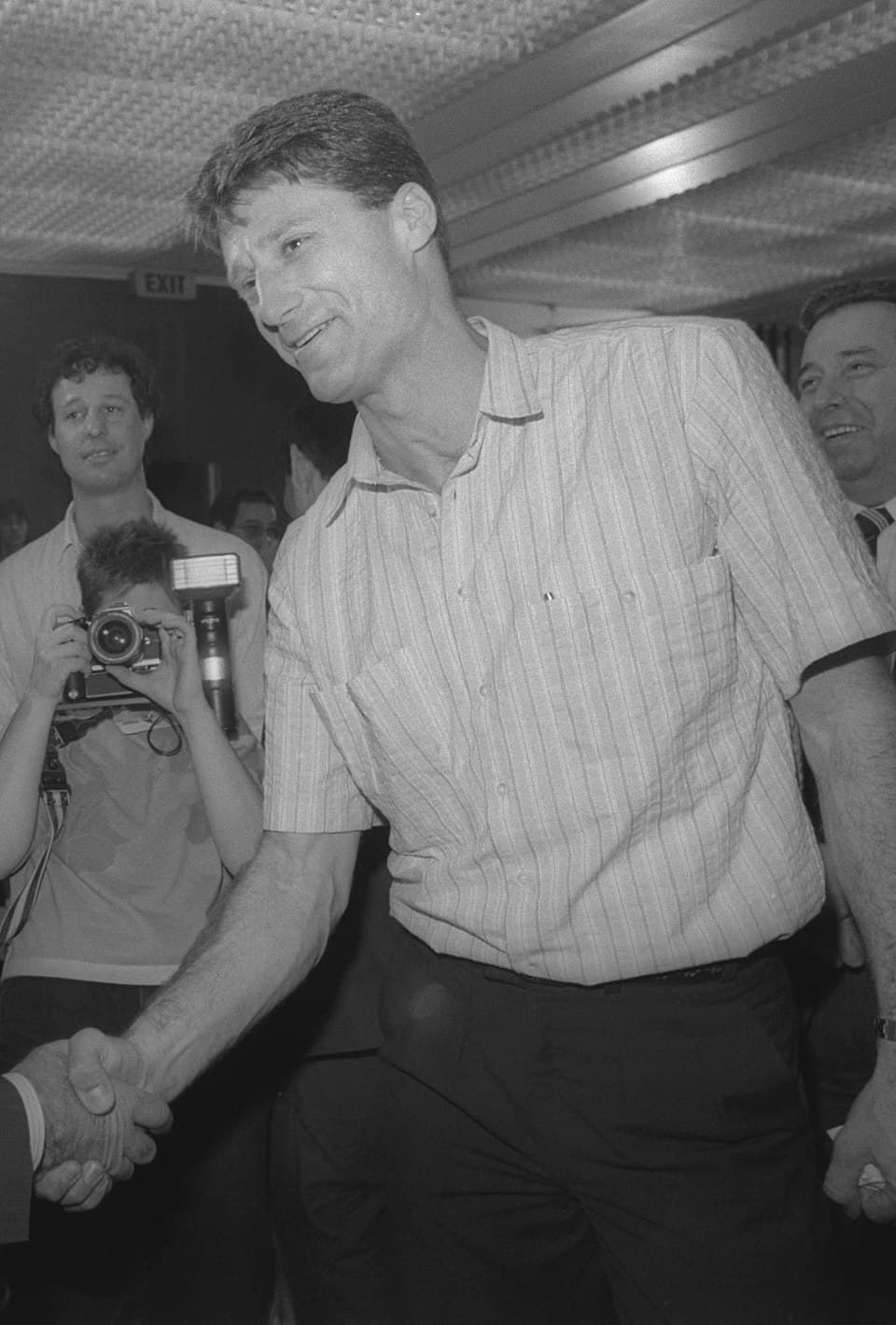
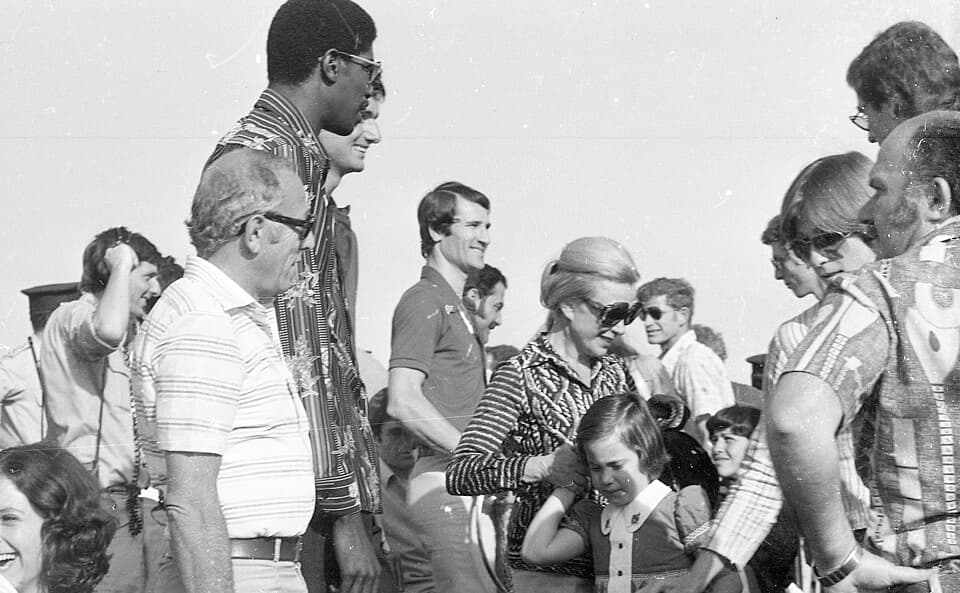
The team's return home was itself a small piece of theatre: photographs from the reception show Brody and his teammates paraded through Tel Aviv to a public still savouring the upset, the entertainer Uri Zohar among those greeting them off the plane. The club would go on to add another Champions Cup title in 1981 and further EuroLeague crowns in the decades that followed, but 1977 remained the one that changed the conversation.
Almost fifty years later, the run through Virton and Belgrade is still the subject of documentary films and retrospectives, most notably Dani Menkin's "On the Map", which traced the story through the eyes of the Americans who came to Tel Aviv to help build it. For a country then just three decades old, still counting its losses from Munich and the Yom Kippur War, a basketball team's improbable run through a Belgian gym and a Belgrade final offered something rarer than a trophy: proof, delivered on the biggest stage the sport then had, that Israel belonged.