Boavista have been ordered to cease the activities the insolvent club runs at the Estádio do Bessa, with the Porto institution required to clear its stadium and adjoining premises by 31 July. The insolvency administrator executed the creditors' closure decision after a monthly payment of €55,000 went unpaid, turning a long financial retreat into an operational shutdown.
The order reaches beyond a senior football result or a licensing penalty. It covers everything Boavista Futebol Clube runs at the Bessa complex, including the club's other sports and development structures. Staff and teams may use the short window before the handover to remove personal property and wind down operations, but the direction of travel is unambiguous: the facilities must be delivered free of people and assets by month's end.
Legal precision matters here, because 'Boavista' contains more than one insolvent body. The member club and the SAD that ran professional football follow connected but distinct processes. A commercial court ordered the SAD into liquidation in May after its recovery plan was withdrawn from a creditor vote. This week's instruction concerns the club establishment and its activities at the stadium — it is not, by itself, a single document dissolving every Boavista legal entity.
The separation has not spared either side the same financial gravity. Public reporting places accumulated debts above €150 million. The club was declared insolvent in 2025 and kept operating only under conditions set by creditors, including recurring payments to cover current costs. Missing the latest instalment activated a mechanism that had already been postponed once, rather than creating a new crisis from an otherwise stable position.
That history is why the shutdown carries more weight than another relegation. Boavista broke Portugal's three-club title grip by winning the league in 2000/01. Two years later they reached the UEFA Cup semi-finals, drawing 1-1 away to Celtic before Henrik Larsson's late goal at the Bessa denied them a place in the final. UEFA's record also shows Boavista eliminating Málaga on that run and winning every home match before the semi-final defeat.
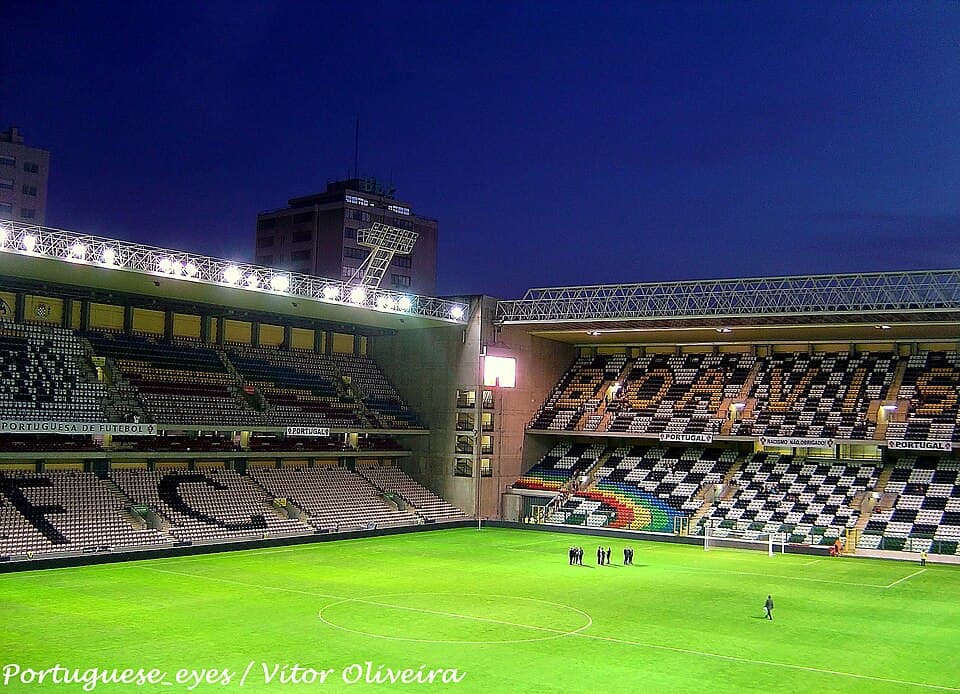
The Bessa was the physical expression of that status. Rebuilt around Euro 2004, it staged Champions League football and housed the club's administrative, sporting and commercial functions. Its loss removes more than a pitch from the balance sheet — a club can replace a training base or rent a ground, but rebuilding the daily network that connects academy teams, other sports, staff and members is a different task altogether, especially with liquidation already consuming the institution's assets.
A recovery attempt is still conceptually possible, through new investment, creditor agreement or a reconstructed sporting organisation. None of that should be reported as secured. The current legal act is the closure order, the missed payment and the deadline to surrender the premises; dissolution and the future ownership of Boavista's sporting identity remain open questions, not facts that can be inferred from the administrator's instruction.
Portuguese football has seen historic clubs fall through the divisions, enter insolvency and reappear in altered form. Boavista's position is harsher because the member institution, the professional company and the stadium have all become entangled in overlapping financial failures. The club that once made the Bessa one of Europe's most difficult away grounds now has two weeks to leave it. Any credible rescue must begin by explaining which Boavista it is saving, what liabilities survive, and where its teams would actually play.