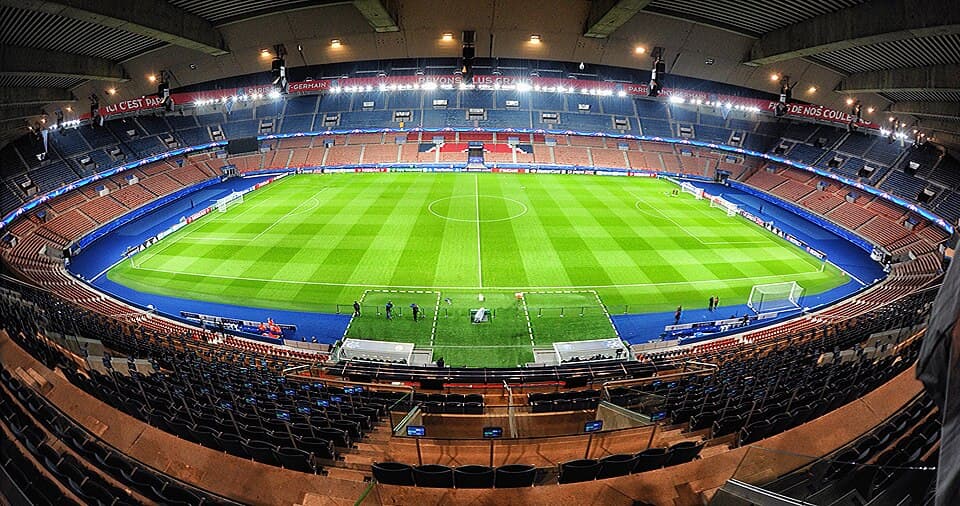
The scoreboard at the Parc des Princes read 2–1 to France, and the clock had entered its final eleven minutes. For the hosts, this was supposed to be the night a place at the 1994 World Cup became official. For Israel, bottom of Group 6 and still without a win in the campaign, there was no qualification prize left to chase.
That imbalance is what makes the ending endure. One team had the ticket almost in hand; the other played as though the match itself was enough.
Ronen Harazi had given Israel a 20th-minute lead. France responded with the authority expected of a side built around Eric Cantona, Didier Deschamps, Jean-Pierre Papin, Laurent Blanc and Marcel Desailly. Franck Sauzée equalised in the 28th minute, and David Ginola made it 2–1 in the 39th.
The Israel Football Association's official record confirms that score at half-time — a familiar shape for a favourite briefly inconvenienced before control is restored.
Control never became comfort. Shlomo Scharf's Israel stayed close enough for one moment to matter. In the 64th minute, Eyal Berkovic replaced Avi Nimni.
With eight minutes of normal time remaining, the substitute scored the equaliser. The IFA records it in the 82nd minute; FIFA's retrospective places it at 82 minutes as well. Either way, the effect was immediate: France had gone from celebration to calculation, and the stadium was waiting for the whistle rather than a party.
Then came the goal that fixed the match in Israeli sporting memory. In the second minute of added time, Reuven Atar scored to make it 3–2. The official records agree on the scorer and the final result.
UEFA later quoted Atar describing it as the greatest moment of his career. It was also his first goal for the senior national team, delivered in Paris against a side that believed its evening had already been written.
The result did not send Israel to the World Cup. The IFA's campaign record shows a team that finished sixth with one win, three draws and six defeats — the victory in Paris was that lone win.
Its meaning came from a different place. Israel had lost the reverse fixture 4–0 and had conceded heavily elsewhere in the group. The Parc des Princes offered no broader redemption, only proof that one match can break entirely from the season around it.
For France, the shock became the first half of a national sporting trauma. They still had one home qualifier left and needed only a draw against Bulgaria.
A month later, Emil Kostadinov's late winner made it France 1–2 Bulgaria and sent the visitors to the World Cup instead. FIFA's histories connect the two Paris defeats, but the Israeli victory deserves to stand on its own — it created the danger before Bulgaria delivered the final consequence.
More than three decades later, the game remains powerful because its facts resist embellishment. Israel trailed at half-time. Berkovic entered from the bench and equalised. Atar scored in added time.
A team with nothing left in the table found something permanent in the record instead — and that precise sequence is why people still tell the story.