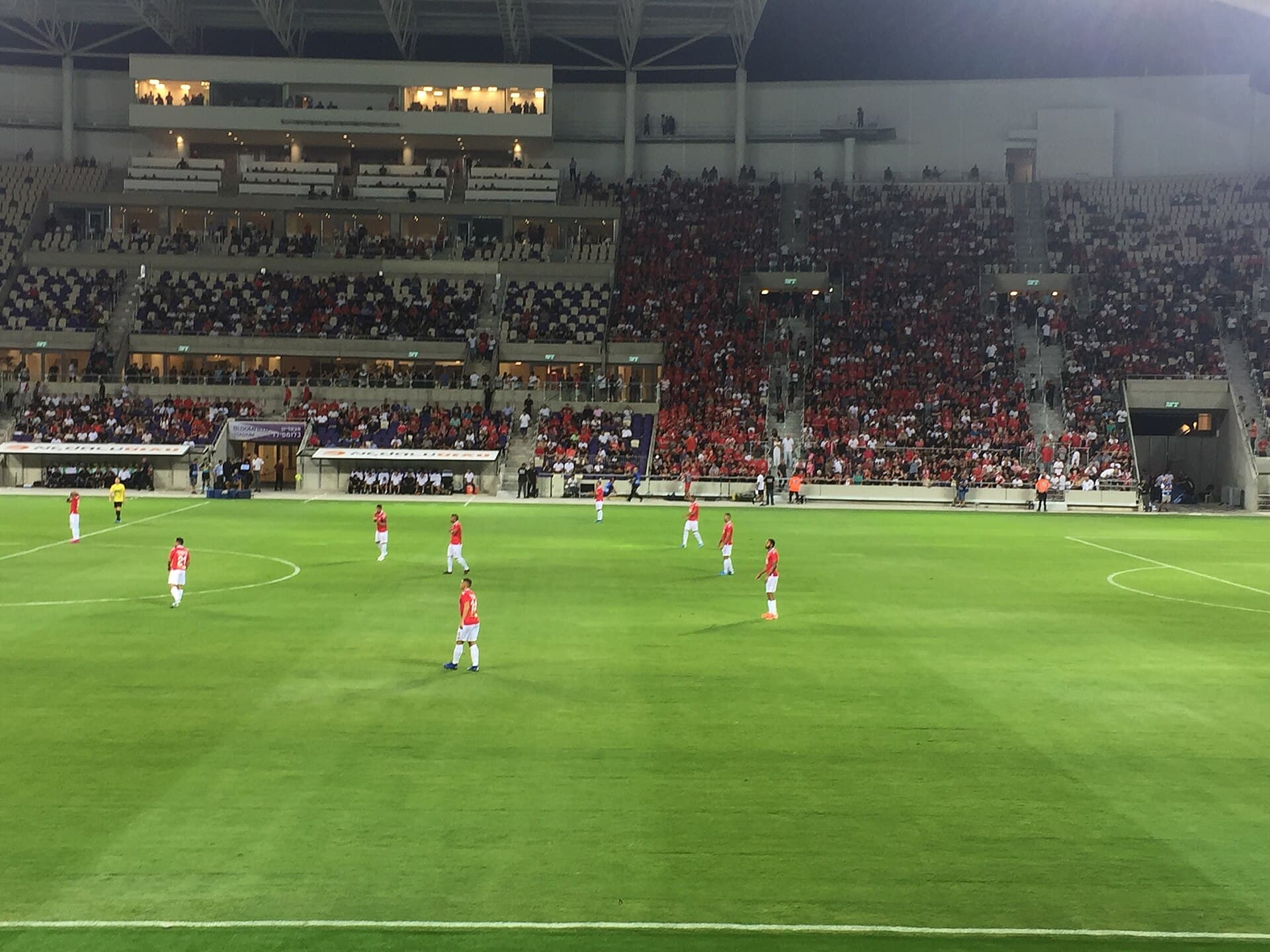
Hapoel Tel Aviv have brought RTMI into the football club's senior commercial roster on a two-year agreement, confirmed on Thursday. The finance company joins as a principal sponsor, extending a relationship already visible elsewhere in the wider Hapoel sporting family. Its mark will sit on the sleeves of the first team's match shirts and on advertising boards at Bloomfield Stadium.
The placement matters more than it might first appear. Sleeve inventory travels with the team in every televised match and survives in photographs long after perimeter advertising has left the frame, giving RTMI a constant association with Hapoel's playing identity without displacing the club's front-of-shirt position. The Bloomfield signage adds a second layer, aimed squarely at spectators, hospitality guests and broadcast audiences on matchday.
This is not a sponsor arriving cold. RTMI backed the men's basketball club in 2024/25 and renewed that agreement for 2025/26, an extension the basketball club described as worth NIS 1 million for the season. In November 2025 the company also became principal sponsor of Hapoel Tel Aviv's senior women's basketball team, so football represents an expansion of an existing relationship rather than a fresh acquisition of red-and-white visibility.
That history gives the agreement more strategic weight than its logo positions alone would suggest. Multi-team partnerships let a sponsor speak to one supporter community across different competitions and seasons, while the clubs gain a partner already familiar with the culture and expectations around the name. The risk is over-commercialisation: Hapoel's value to partners rests heavily on supporter identity, so every additional mark has to feel integrated rather than rented.
RTMI owner Stav Shaham supplies a personal link to the club. He previously owned Hapoel Kfar Saba and has been publicly involved with Hapoel Tel Aviv basketball as both sponsor and board member. In the football club's announcement he framed the move as the next stage of a longer commitment to Hapoel rather than an isolated campaign, while chief executive Guy Primor and commercial director Harel Cohen presented the agreement as part of the club's attempt to deepen its business network.
For Hapoel, a two-season term offers more than a one-off injection of money. Commercial departments can plan activations, hospitality and supporter-facing work across a full cycle instead of renegotiating every few months, and the club gains time to judge whether the basketball-to-football crossover produces measurable value rather than just launch-day attention.
The first public test will be ordinary matchday exposure. Supporters will see the new mark on the players' sleeves, and television viewers will meet it there and again around the pitch at Bloomfield. Sponsorships are often announced in abstract language, but this one has unusually concrete touchpoints — and its success will depend on whether Hapoel and RTMI turn those visible positions into a partnership that supporters recognise as more than a logo.