Israel arrived in Mexico in 1970 as World Cup debutants, having qualified against Australia and stepped into a tournament whose scale the squad had previously only watched from a distance. The opening group match brought a 2–0 defeat by Uruguay. That result left Emanuel Sheffer's side needing a response against Sweden in Toluca — not for symbolism, but simply to stay alive in the competition.
The pressure had a simple shape. Israel had only three group matches and no cushion for a slow start, with two points awarded for a win under the scoring system of the time. Another defeat would have left the final fixture against Italy with almost no competitive leverage. Sweden, in other words, was the match where participation had to become resistance.
The first half on 7 June ended goalless. Sweden broke through in the 56th minute through Tom Turesson, according to the Israel Football Association's official match record. For a debutant already behind in the group, the goal could have made the tournament suddenly feel very short. Instead, Israel answered almost immediately.
Mordechai Spiegler equalised in the 59th minute. FIFA's retrospective describes a strike from around 20 metres, while the IFA record confirms both the scorer and the 1–1 final score. The distance matters: this was not the product of a slow passing move worked into the six-yard box, but a decision taken early and struck cleanly enough to change the match before Sweden could settle into its lead.
The goal remains unique. The IFA's campaign record shows Israel scored only once across its three matches in Mexico, making Spiegler the country's sole men's World Cup goalscorer. Stripped of context, that distinction can sound like a museum label. In its real setting, it was an equaliser struck three minutes after falling behind, under the pressure of possible elimination.
Its timing also reshaped the tactical picture. Sweden never got the chance to protect its lead through a long spell of slower possession or a deeper defensive block, because Israel removed that game state almost as soon as it appeared. The remaining half hour became a contest for the next goal rather than an attempt to escape a settled Swedish advantage — holding the draw was active match management, not survival after a late consolation.
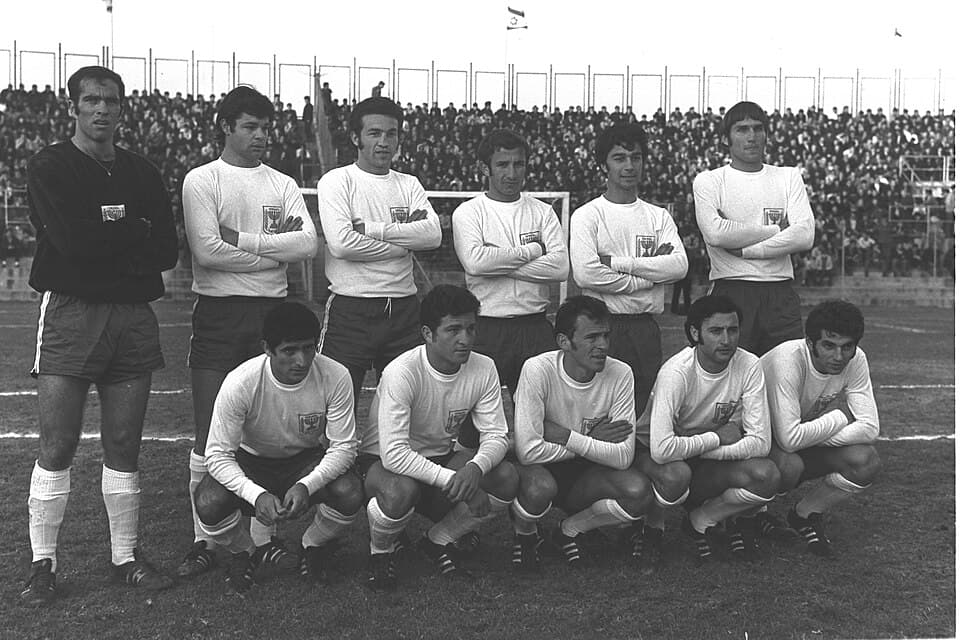
Israel's team was built on collective discipline rather than reliance on one star to carry every phase of play. The line-up against Sweden read: goalkeeper Itzhak Vissoker, captain David Primo, Itzhak Shum, Giora Spiegel and Spiegler. FIFA later recalled the squad's club-like cohesion, with preparation, shared responsibility and an absence of ego central to how the players believed they could compete.
Four days later, Israel drew 0–0 with Italy in the same city, an Italian side that included Luigi Riva and Gianni Rivera, according to the IFA record — and did so without conceding. Combined with the result against Sweden, it meant the debutants left Mexico with two points under the scoring system then in use, and only three goals conceded across three matches.
Israel have not returned to the men's World Cup since 1970, an absence that adds extra weight to every surviving photograph and replay. But the achievement needs no romantic inflation. The sequence speaks for itself: a first tournament, an opening defeat, an immediate response against Sweden, a clean sheet against Italy, and one goal that still stands as the country's entire World Cup scoring record.