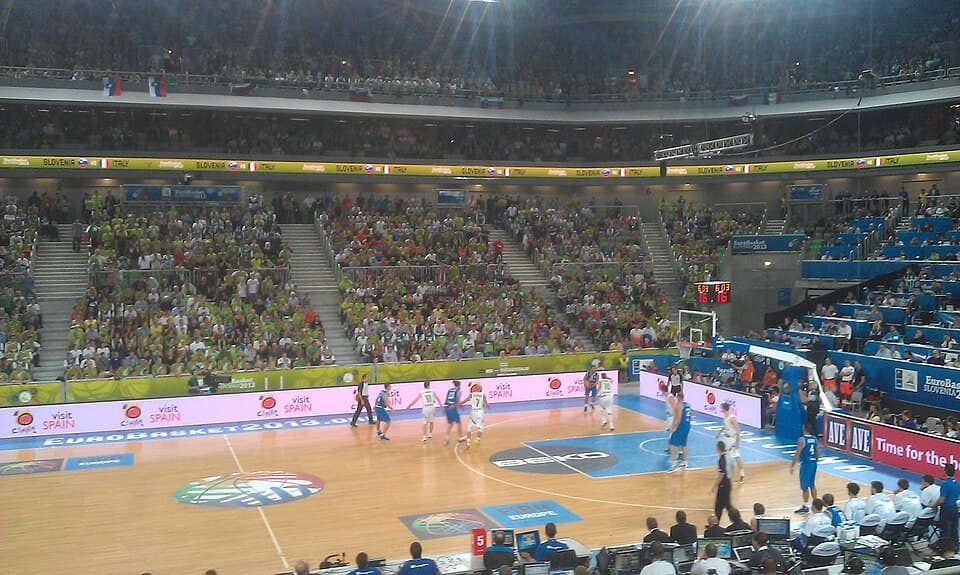
Israel's men's under-20 team did not merely lose a knockout game to Greece. It crossed into a different tournament. The 79–66 defeat in the round of 16 at Arena Stožice II ended any route to the quarter-finals and dropped Oren Aharoni's side into the classification bracket for ninth to 16th place.
The next opponent is already fixed: Italy, in Ljubljana on Thursday. The winner advances towards places nine to 12; the loser falls into the bracket where relegation from Division A is decided.
Greece created a separation that Israel never recovered from. Oren Sahar scored 20 points and Rany Belaga added 19, meaning two players supplied 39 of the team's 66. That concentration did not make defeat inevitable, but it left too small a margin once other possessions stopped producing. In youth tournament basketball, where scouting time is short and physical condition shifts fast, a team needs a third scoring route once its top two options are carrying almost three-fifths of the total.
The disappointment stings more because Israel had built a credible group phase: a 78–68 win over Romania, a 90–77 loss to host Slovenia, then an 87–73 win over Czechia for a 2–1 record. Across those three games Israel averaged 80.7 points. Greece held the team nearly 15 points below that mark, narrowing a functioning offence into little more than Sahar and Belaga.
The format offered no cushion for that winning record. All 16 teams entered the round of 16, so group performance decided the pairing but bought no bye and no second route to the title bracket. One defeat was enough to remove Israel from the top half — and the same format now hands the team an immediate second assignment, this time with survival rather than a medal shaping the stakes.
Italy arrive in the same position after an 86–63 loss to Serbia, their own tournament equally uneven. Neither round-of-16 margin should be read as a forecast for Thursday, and both sides have had less than a day to reset. The more relevant contest will be over control — which team can run its half-court offence without letting the earlier defeat rush its decisions or turn missed shots into hurried defensive transitions.
For Israel, the rotation needs to create support without asking Sahar and Belaga to play any less aggressively. A third ball-handler reaching the paint, an extra shooter converting the first clean kick-out, a frontcourt player generating second possessions — any of it would change the geometry of the attack. The goal isn't balance for its own sake; it's to stop Italy loading its defence onto the two players who carried the scoring against Greece.
The relegation arithmetic is unforgiving but not yet terminal. The eight round-of-16 losers play through the nine-to-16 classification bracket, and only the teams finishing 14th, 15th and 16th drop from Division A. Beat Italy, and Israel guarantees a nine-to-12 finish, removing that danger outright. Lose, and Aharoni's team enters the 13-to-16 bracket, where just one of four final positions is safe.
That is why the response matters beyond this squad's eventual ranking in Ljubljana. Division A keeps Israel's under-20 programme inside Europe's highest annual competitive tier. The tournament Israel wanted after the group phase is gone, but the team still controls whether this becomes a contained knockout disappointment or a structural setback — and Italy is the first, cleanest chance to settle which.