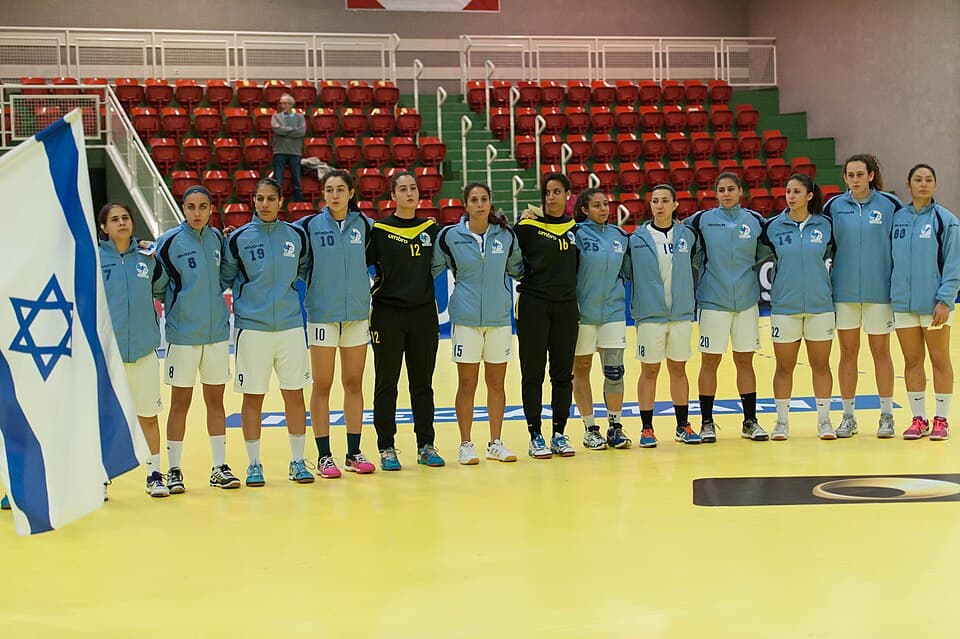
Israel's men's under-20 handball team lost 33–31 to the Faroe Islands in the M20 EHF EURO cross match for places 9–16, surrendering a two-goal halftime lead but keeping their route to the 2027 IHF Men's Junior World Championship alive. The official tournament record confirms the final score and the 17–15 interval advantage for Israel.
The arithmetic of the two halves tells the story of the reversal on its own. Israel scored 17 before the break and 14 after it, while the Faroe Islands went from 15 goals in the first half to 18 in the second. That four-goal swing over 30 minutes turned a controlled position into a narrow defeat, with the match still close enough that neither side could build a decisive cushion.
Israel arrived in the placement phase after a volatile preliminary group in Romania, where they beat Bosnia and Herzegovina 43–33 but lost 42–33 to Sweden and 39–31 to the hosts. Israel, Romania and Bosnia finished level on points behind Sweden, and Romania went through to the main round on goal difference. Israel continued instead through the intermediate route.
That distinction shaped Thursday's stakes. The Faroe Islands had already reached the main round and were inside the tournament's leading group, while Israel entered the 9–16 cross matches from the intermediate phase. The Faroese win moves them toward the places 9–12 games; Israel now enter the places 13–16 path, where the final ranking carries a consequence larger than the position itself.
The IHF has set the qualification line for the 2027 Men's Junior World Championship at 15th place. Twelve European teams have already secured their tickets by reaching the M20 EURO main round, leaving three places to be settled lower in the ranking bracket. For Israel, one win across the remaining placement sequence would guarantee a finish no lower than 15th and claim one of those last European berths.
That makes the Faroe defeat painful rather than terminal. Israel no longer have the margin to treat the next match as another development fixture: a victory would complete the qualification job, while another loss would push the decision into the final contest for 15th. The team have already shown they can produce sustained attacking stretches at this level; Thursday's second half exposed how quickly a small defensive decline can undo that work.
The broader value of qualification is competitive continuity, moving this group from a demanding European championship directly into another global age-grade tournament and adding high-level matches just as many of these players begin competing for larger senior roles. The immediate task, though, is much narrower: protect the defensive standard that built the 17–15 lead, find enough second-half scoring to avoid another late squeeze, and turn one of the next two opportunities into a World Championship place.