Israeli football enters the 2026/27 season under a law book designed to make delay more expensive and certain video-officiating errors easier to correct. The Referees Association has now set out the domestic application of changes that took effect internationally on 1 July. They alter who receives the next restart when a team wastes time, restrict the benefit of slow substitutions and treatment stoppages, and extend VAR into a small number of disciplinary and identity decisions that previously sat outside its reach.
The most visible intervention concerns throw-ins. A referee who judges that the team taking the throw is delaying unfairly can whistle, signal for the restart and begin a raised-hand countdown from five. If the ball is still not in play when the count expires, possession changes: the opposition take the throw from the same position. This is not an automatic five-second clock after every ball crosses the touchline; it begins only when the referee identifies deliberate or unfair delay.
Goal kicks now carry a more severe territorial consequence. The same whistle, signal and visual countdown can be used when the restart is being delayed, and failure to put the ball into play by the end of the count gives the opponents a corner on the nearest side. A yellow card is not automatic at that point, since the lost restart is already the punishment; a caution is reserved for excessive delay after the decision has been reversed.
That distinction should change the calculation for teams protecting a lead. A slow throw-in once risked little beyond a warning or booking; it can now surrender the ball immediately. Delaying a goal kick is costlier still, since it converts a protected restart deep in a team's own territory into an attacking set piece for the opposition. Coaches will need replacement balls, clear restart options and players who recognise the referee's signal before five seconds disappear.
Substitutions receive their own clock. Once the board is shown, the departing player generally has ten seconds to leave the field. Missing that deadline does not cancel the change, but it does prevent the replacement from entering immediately: play restarts with the team temporarily reduced, and the substitute must wait until the first stoppage after one running minute has elapsed. The sanction targets the competitive reward for a slow walk rather than treating every delayed exit as an automatic booking.
Treatment stoppages carry a parallel cost. A player assessed on the field, or whose injury causes play to be stopped, must ordinarily leave and remain outside for one minute after the restart. The law retains defined exceptions, including goalkeepers and players hurt by a physical offence for which an opponent is cautioned or sent off — a distinction meant to deter tactical stoppages without punishing a player whose opponent has committed a serious or reckless offence.
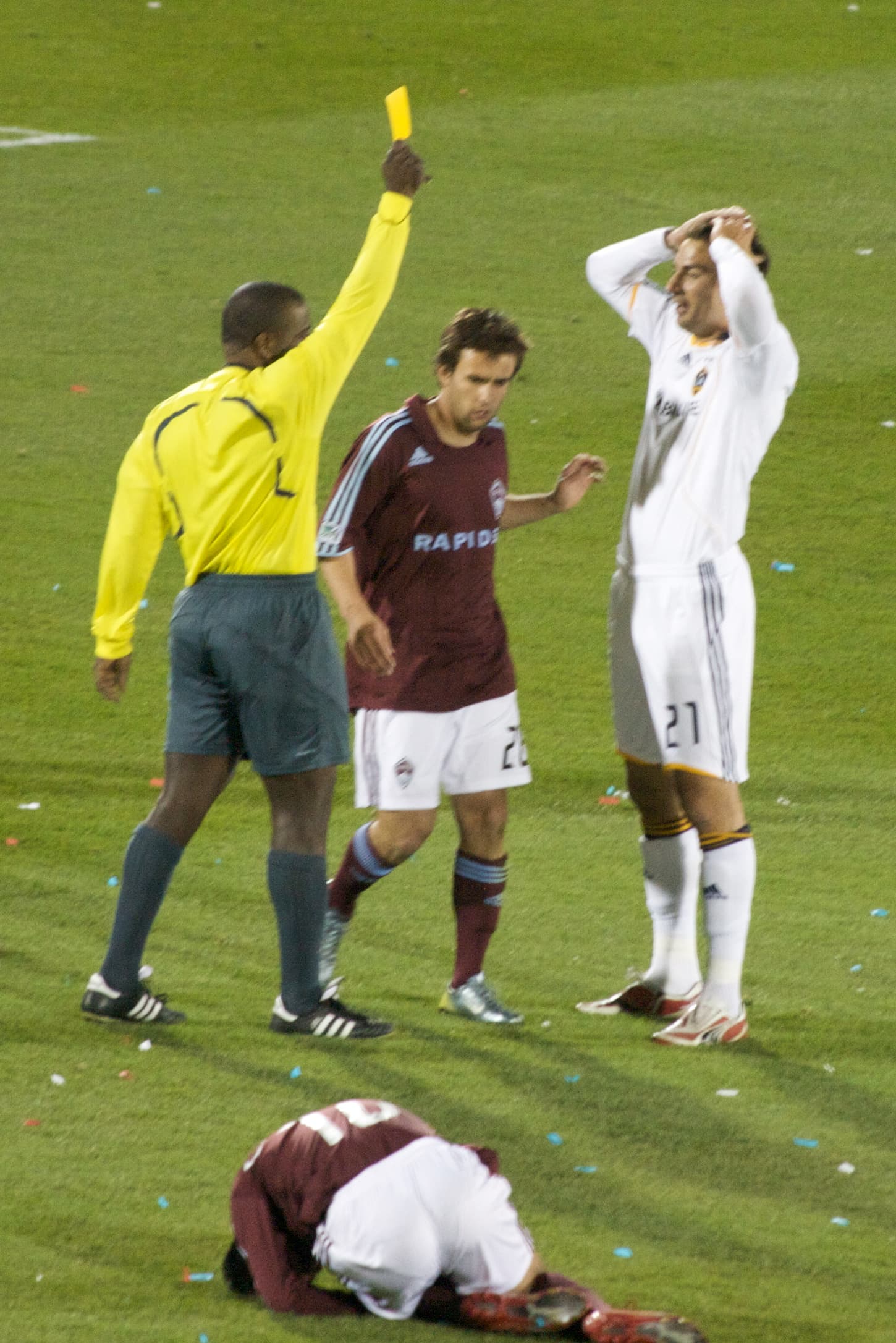
VAR's remit also expands, though within defined limits. A red card produced by a clearly incorrect second yellow can now be reviewed. The video official is not being invited to revisit every caution; the intervention concerns the dismissal created by the second booking and still requires a clear error. The change addresses the previous anomaly in which a direct red card could be corrected but an equally damaging dismissal caused by a plainly wrong second caution generally could not.
Mistaken identity has been widened as well. Video officials may assist when the referee shows a yellow or red card to the wrong player, even if the actual offender belongs to the other team. Competitions can also choose to permit immediate review of a clearly incorrect corner award, but only when the decision can be corrected before the restart and without manufacturing a new delay.
The optional language matters in Israel. Competitions without VAR cannot use a video protocol they do not operate, and competition organisers must decide whether to adopt the corner-review option. The universal law changes and the optional protocols should therefore not be collapsed into a promise that every match, division or stadium will be officiated in precisely the same way.
Supporters should notice the restart countdown first, since it produces an unmistakable visual cue and an immediate sporting penalty. Coaches may feel the substitution and treatment rules more sharply, as both can leave a side playing with ten for a controlled period. The broader test will be consistency: if referees reserve the sanctions for the circumstances defined in the law and communicate them clearly, the changes can remove dead time without turning ordinary stoppages into theatre. If application varies sharply between matches, the argument will shift from the purpose of the rules to the threshold for using them.