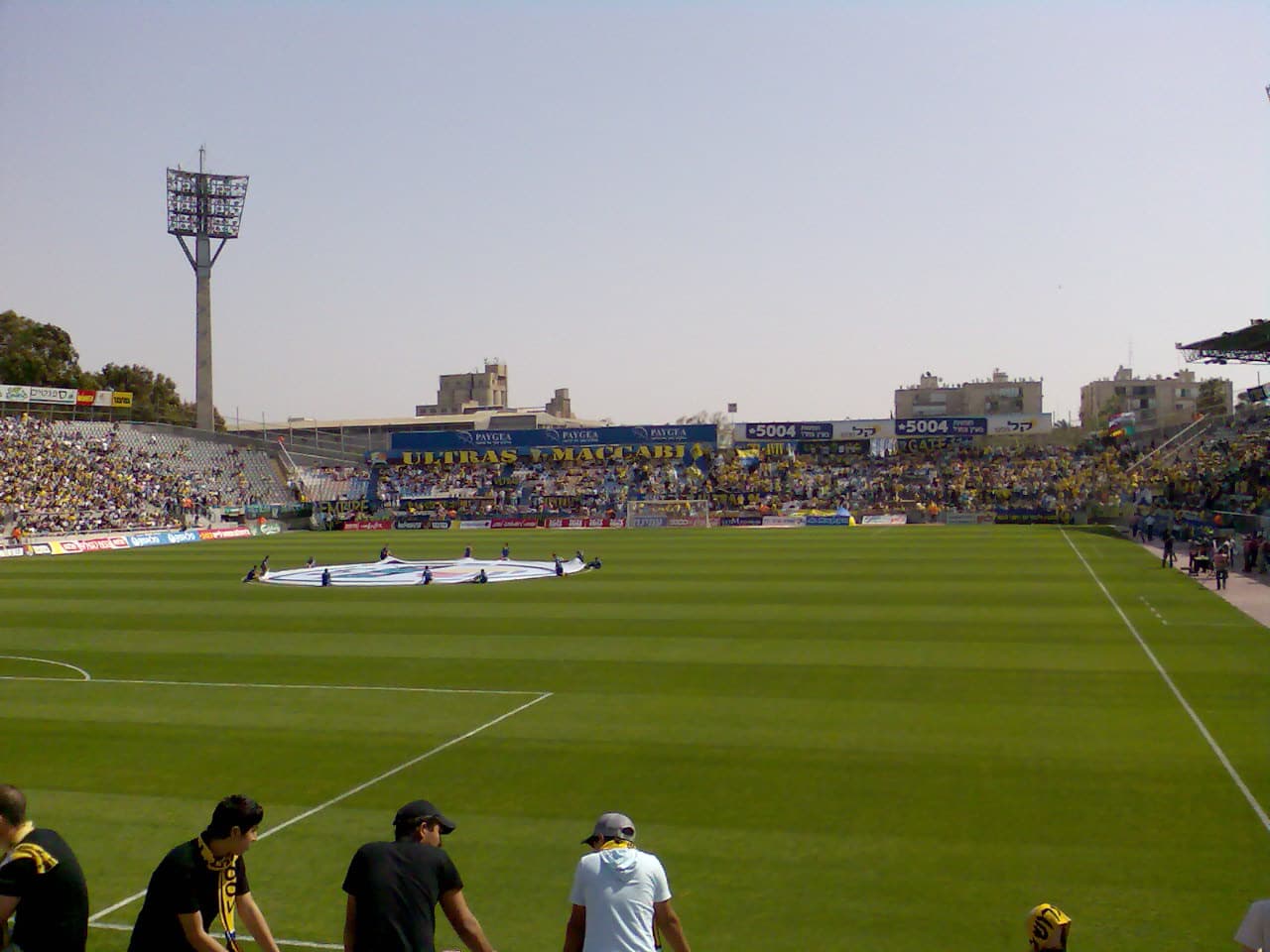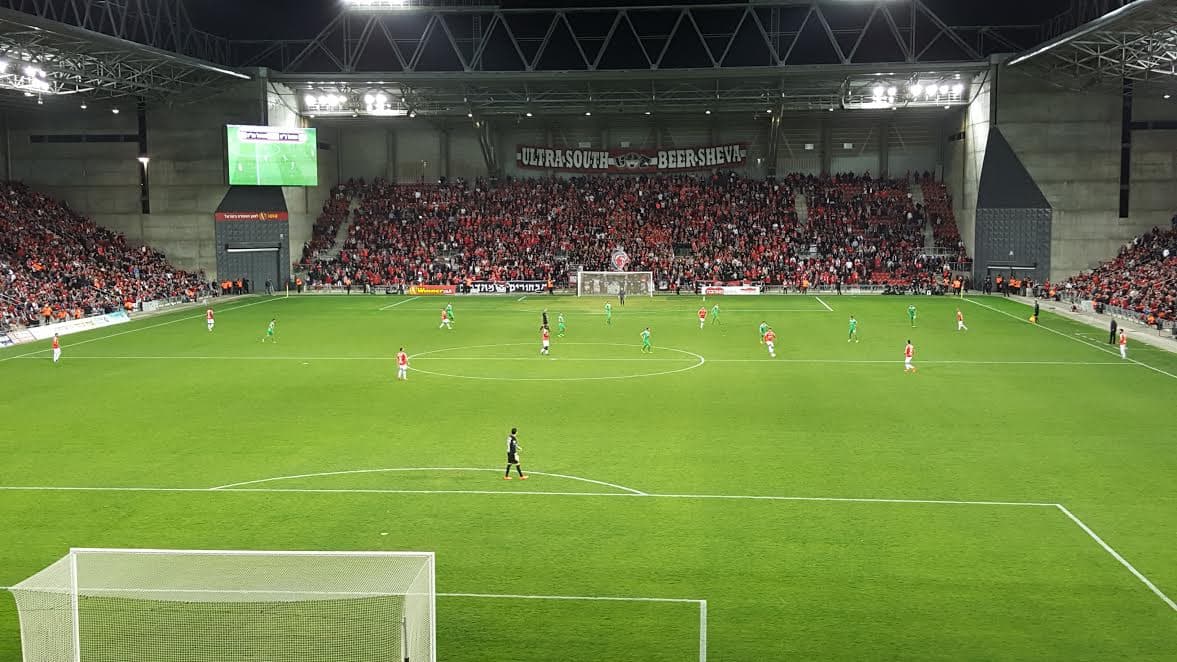
Ten-man Maccabi Tel Aviv beat Hapoel Be’er Sheva 3–1 at Turner Stadium on Thursday night to win the Israel Super Cup. Saied Abu Farchi scored twice and Sagiv Yehezkel supplied all three Maccabi goals, turning the season’s first domestic showpiece into a forceful statement by the State Cup holders.
Maccabi’s opening goal punished a serious error in Be’er Sheva’s defensive build-up, gifting Abu Farchi a direct route to goal. Be’er Sheva’s reply was more inventive: Kangwa completed the move with a backheel, restoring parity before Maccabi could settle into protecting the lead. The exchange turned what had promised to be a cautious first competitive outing into an immediate test of which side could regain control faster.
Maccabi retook the lead in the 58th minute through Dor Peretz, set up by a Yehezkel delivery. The move rewarded Maccabi for finding Peretz between Be’er Sheva’s midfield and defensive lines: Yehezkel carried the ball to the left side and supplied the final ball, and Peretz did not need maximum power, placing his finish accurately enough to beat Ofir Marciano. It also gave him a goal that stood, after an earlier effort had been ruled out for offside in the build-up.
Roy Revivo was shown a second yellow card in the 66th minute, reducing Maccabi to ten men. They refused to protect a one-goal margin passively, attacking the space behind Be’er Sheva’s advancing shape, and another Yehezkel cross let Abu Farchi complete his brace and settle the final at 3–1.
Yehezkel was briefly shown a second yellow card of his own during a late substitution, after turning back from the nearest touchline when cups were thrown towards him. Referee Aviv Klein reviewed the incident and cancelled the caution. The intervention was permitted under the 2026/27 law change that allows VAR to review a clearly incorrect second yellow when it immediately produces a red card; the substitution law also permits a different exit point for safety or security reasons.
The opening exchanges exposed the tactical burden carried by both midfields. Maccabi’s five-man unit is designed to place bodies around the ball and release Dor Peretz or Sagiv Yehezkel in support of Abu Farchi, while Be’er Sheva need Lucas Ventura and Eliel Peretz to protect transitions while allowing Kangwa to move into scoring positions. Both mechanisms produced an early reward; neither, at first, gave its defence sustained protection.
Be’er Sheva started Ofir Marciano, not new signing Marco Wolff, in goal. Guy Mizrahi, Miguel Vítor, Matan Baltaxa and Ofir Davidzada formed the back line, with Roy Levy and Amir Ganah supporting Igor Zlatanović. Maccabi selected Ofek Melika behind Itay Ben Hamo, Mohamed Ali Camara, Raz Shlomo and Roy Revivo, with Abu Farchi ahead of Yehezkel, Itamar Noy, Issouf Sissokho, Ido Shahar and Peretz.
The football began after a significant security operation around Turner. Four people were detained close to the stadium after police found several clubs during a vehicle search, and Be’er Sheva station officers transferred the occupants for further questioning while the South District deployed additional personnel in the area before kick-off.
No charge, supporter affiliation or attempt to enter the stadium was specified in the pre-match police account, and no injury was reported in connection with the stop. The established facts are the intervention, the seizure and the detentions; they do not support a conclusion about criminal responsibility or a link to either club without further official information.
The fixture was a direct rematch of the two showpieces that framed last season. Be’er Sheva won the previous Super Cup 2–1 despite playing most of the match with ten men, then went on to secure the league title, before Maccabi responded in May by beating Be’er Sheva 2–1 in the State Cup final. Thursday’s win reversed the previous Super Cup result and added a second consecutive trophy against the champions.
The European calendar gives the performance value beyond the silverware. Be’er Sheva move into Champions League qualifying against Víkingur Reykjavík, while Maccabi begin their Europa League programme later in July. Maccabi’s transition threat and response to the red card provide a strong platform, but both teams must still reduce the moments when one lost pass exposes an entire defensive structure.