The 16th Maccabiah opened at Jerusalem's Teddy Stadium on 16 July 2001, after coming close to postponement. A deteriorating security situation had reduced expected participation and forced organizers to reconsider whether the Games could proceed at all. The eventual opening was therefore more than a ceremonial start — it was the moment months of uncertainty became an actual competition.
The Maccabiah's later official history records an emergency meeting in June and government assurances of exceptional security measures. That retrospective explains the institutional decision. Contemporary reporting shows what it looked like on the ground: athletes were assigned protection in transit, entry checks were extensive, and the opening-day account counted more than 1,000 security personnel around the stadium.
Even under those conditions, the ceremony had scale. A report filed from Jerusalem that night recorded more than 2,000 athletes representing 45 countries and an estimated 20,000 local spectators. Delegations entered to applause, with the Israeli team receiving the largest response, while fireworks, acrobats, dancers and mass performance turned the field into a stage without disguising the tension outside it.
The two athletes entrusted with the flame gave that spectacle a sharper sporting meaning. European pole-vault champion Alex Averbukh carried the torch into Teddy Stadium, and Keren Leibovitch — who had won three swimming gold medals at the Sydney Paralympics the previous year — lit it. Their roles joined elite Israeli achievement across Olympic and Paralympic sport at the exact moment organisers were asking the Games to stand for continuity.
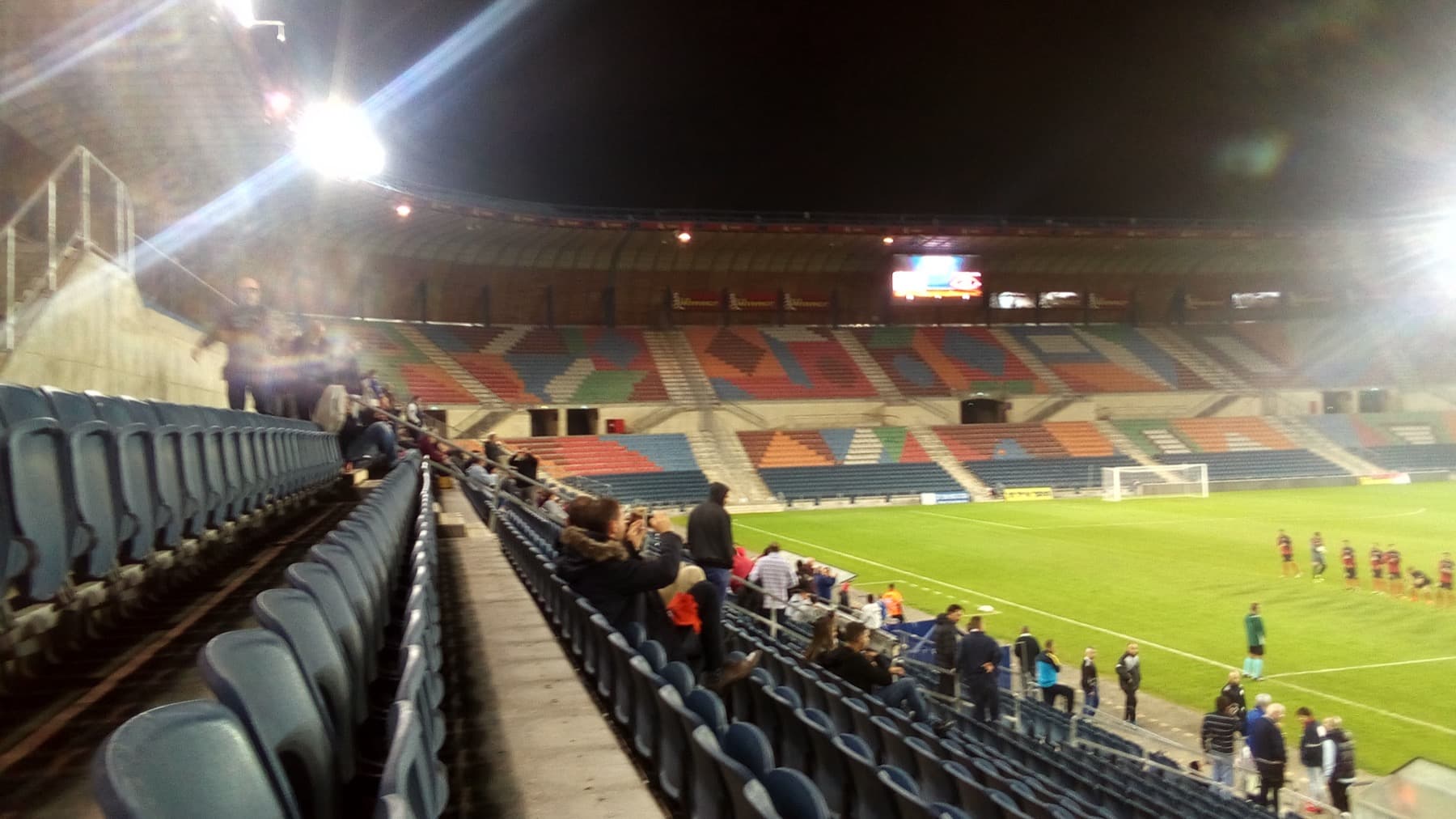
Teddy Stadium carried its own significance: the official Maccabiah record identifies the 2001 ceremony as the first opening in the movement's history to be held there. Moving the event to Jerusalem placed the Games in a venue surrounded by the political and security pressures of the moment, rather than insulating the ceremony from them.
There was another memory the organizers could not set aside. Four members of the Australian delegation had died after the bridge collapse at the 1997 Maccabiah opening in Ramat Gan, and the 2001 ceremony included a memorial for those athletes, while the Australian team had gathered at the collapse site the previous day. The new Games were opening while responsibility, grief and trust from the previous edition remained unresolved.
The program itself had been cut back. It ran seven days instead of the usual ten, and the field was smaller than at a normal Maccabiah. Contemporary coverage before the opening expected roughly 2,000 athletes from around 40 countries, against about 5,000 participants in a typical edition — a forecast that differs slightly from the opening-night count simply because it was written before final arrivals. Together, the two describe the same reality of a reduced but still international Games.
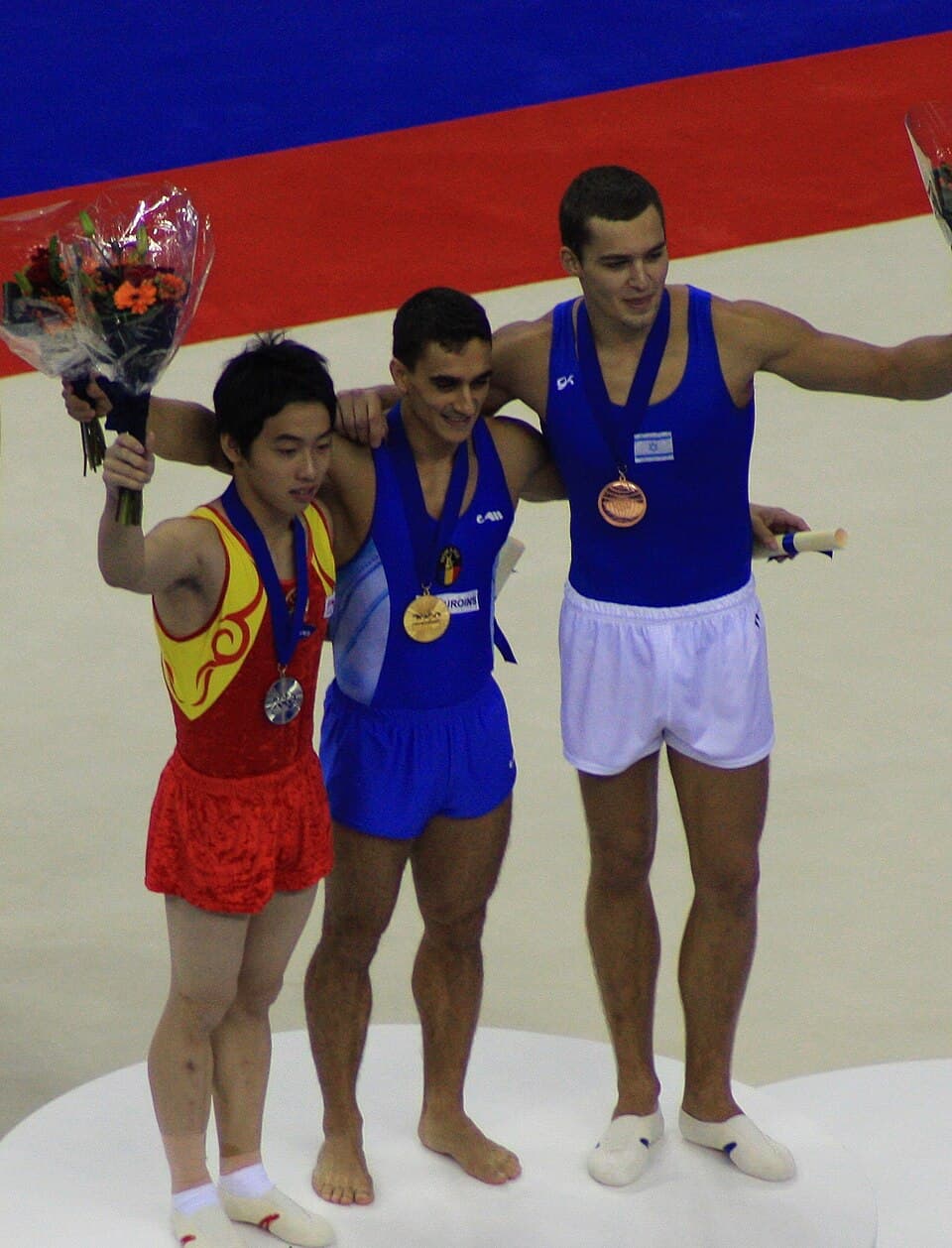
Competition still produced an emphatic sporting record. Israel finished far ahead in the medal table with 96 golds, 74 silvers and 74 bronzes; the United States followed with 21 golds, 23 silvers and 30 bronzes. Olympic champion Lenny Krayzelburg was the leading name in the pool, while Olympic gold medallists Maria Mazina and Sergei Charikov strengthened the fencing programme. Those figures matter because they prevent the event from being remembered only as a security operation with an opening ceremony attached.
Later recollection often treats the 2001 Maccabiah as a statement of resilience, and the contemporary evidence supports that reading — though it also makes the achievement less abstract. Athletes made individual decisions to travel. Organizers accepted a compressed event. Security personnel transformed how everyone moved, and Jerusalem spectators filled Teddy Stadium anyway.
The enduring fact is not that fear disappeared on 16 July. It is that a Jewish international sporting event began in full public view while that fear was still present.