A coroner has concluded that a brain condition caused by repeated heading contributed to the death of England World Cup winner Nobby Stiles. Senior coroner Alison Mutch reached the finding at an inquest in Stockport, almost six years after Stiles died in October 2020 at the age of 78. The ruling is deliberately more precise than a claim that football alone caused his death: it identifies a specific disease process, its cause in his case, and its contribution to the final medical picture.
Postmortem examination showed severe dementia associated with both Alzheimer's disease and chronic traumatic encephalopathy, or CTE. Neuropathologist Daniel Du Plessis attributed the CTE to Stiles's repeated heading during his playing career. The inquest heard an estimate of roughly 140,000 headers across his career, a figure that describes the scale of exposure presented to the court. It does not mean medicine can assign equal damage to every header, or calculate an individual player's future risk from a simple total.
The distinction between Alzheimer's disease and CTE matters. They are different neurodegenerative conditions, though both can contribute to cognitive decline, and CTE is established through characteristic changes found in brain tissue after death. The inquest's conclusion concerns Stiles as an individual, based on his medical evidence and exposure history. It adds a powerful legal finding to football's brain-health debate without turning one case into a universal diagnosis for former players.
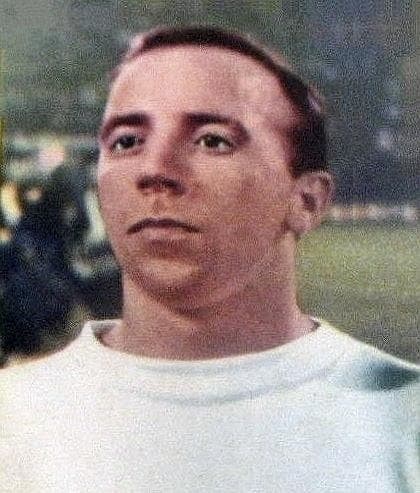
Stiles's stature gives the ruling unusual resonance. The Football Association's official record shows that he played every minute of England's victorious 1966 World Cup campaign, won 28 international caps, and spent 11 years in Manchester United's first team, helping the club win two league titles and the 1968 European Cup. The image of his Wembley victory dance, the Jules Rimet Trophy in one hand and his false teeth in the other, became part of English football's visual memory.
The wider evidence already points to an elevated burden of neurodegenerative disease among former professionals, even as the exact mechanism remains under investigation. The 2019 FIELD study compared 7,676 former Scottish professional players with 23,028 matched controls. Neurodegenerative disease was recorded as the primary cause of death in 1.7% of former players against 0.5% of controls, an adjusted rate about three and a half times higher. Crucially, that study did not establish whether heading, concussion, another feature of the sport, or a combination of factors explained the difference.
Football has nevertheless changed its practice on a precautionary basis. Professional guidance in England recommends no more than ten higher-force headers in a training week, focusing on actions such as meeting long passes, crosses and set pieces. At grassroots level, the phased removal of deliberate heading from younger age groups has expanded over successive seasons. Those policies acknowledge a potential cumulative risk while research continues; they should not be misread as proof that every form of heading carries the same danger.
The Stiles finding will intensify scrutiny of the game's historic duty of care and its support for former players living with dementia. His family is among those pursuing separate civil claims against football authorities. An inquest determines the medical cause and circumstances of a death; it does not decide negligence or damages. The coroner's conclusion is therefore highly significant evidence, but the broader questions of legal responsibility remain for a different process.
For the sport, the responsible response is neither denial nor an exaggerated promise that the science is complete. Stiles's case establishes that repeated heading caused his CTE and that the resulting brain condition contributed to his death. The population research shows a wider association between professional football and neurodegenerative mortality but cannot yet apportion the cause. Holding both truths at once is the basis for better rules, better long-term care, and a more honest account of the physical cost carried by an earlier generation.