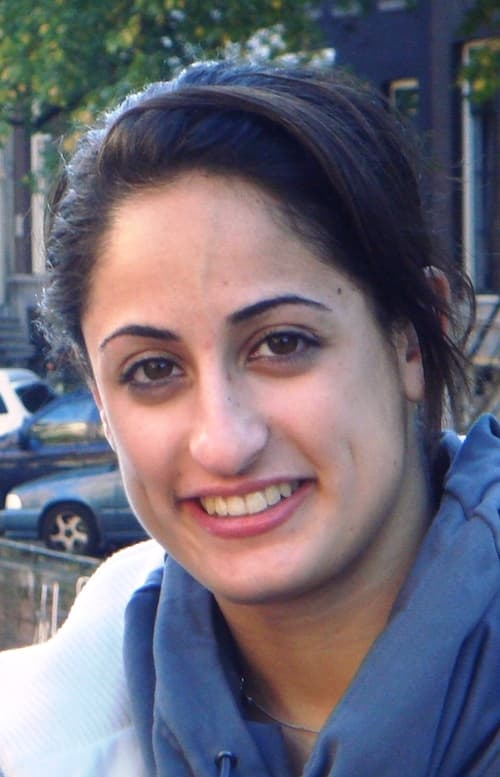
The Ginásio do Maracanãzinho in Rio de Janeiro had hosted basketball finals and rock concerts, but on the night of 29 August 2013 its mats belonged to judo, and to a 24-year-old from Netanya who had spent the whole tournament refusing to let a single fight go the distance.
Yarden Gerbi arrived at the 2013 World Judo Championships as the world number one in the under-63kg division, having won successive Grand Slam titles in Baku and Moscow earlier that year. She had been training since the age of six under coach Shany Hershko at the Meitav Netanya club, and by 2013 she already held five Israeli national titles. What she did not yet have was a global one.
She set about fixing that with brutal efficiency. Gerbi opened the tournament by beating El Salvador's Karla Catola Quijano in 45 seconds, and kept winning by ippon through every subsequent round. In the semifinal she faced Japan's Kane Abe, the world number four, and pulled off a grinding chokehold to force a submission after two minutes and 47 seconds — her longest fight of the day, and still one that never reached the judges.
That set up a final against Clarisse Agbegnenou, the reigning European champion from France and, by most accounts, a genuine friend of Gerbi's on the international circuit. Friendship did not survive first contact. Gerbi took Agbegnenou down, secured a chokehold, and had the match won by ippon in 43 seconds — the shortest, and biggest, fight of her career.
It was Israel's first-ever gold medal at a Judo World Championships, in either the men's or women's draw. Gerbi was only the fifth Israeli to win any medal at the event, following Yael Arad, Oren Smadja, Arik Ze'evi and Alice Schlesinger — but the first to stand on the top step.
The reaction at home was immediate. Prime Minister Benjamin Netanyahu telephoned to congratulate her, calling the win a "fantastic achievement" and praising what he described as her "swift, elegant" style. President Shimon Peres invited her to his residence, telling her she had won through "wisdom, clarity and strength" and calling her, admiringly, "a real pistol."
Gerbi herself, still catching her breath trackside in Rio, put it more simply: "I'm so happy that it really ended this way. I had a great competition... Nothing can be better than this. I cried a little for my parents; they also cried."
The gold did not come from nowhere. Gerbi had already collected a bronze at the European Junior Championships in 2008 and a Maccabiah silver in 2009, climbing steadily through the ranks under Hershko's guidance before her breakthrough season in 2013. Rio confirmed what her results that year had been suggesting: for a few months at least, nobody in the world beat Gerbi at 63 kilograms.
She would not have the division to herself for long. Agbegnenou reversed the result a year later, beating Gerbi in the 2014 World Championship final, and went on to become one of the most decorated judoka in history. But Gerbi's own story was far from over — she added a European Games bronze in 2015 and, in Rio again three years after her world title, an Olympic bronze at the 2016 Games, Israel's first judo medal there since Ze'evi's bronze in Athens.
Gerbi was named Israel's Sportswoman of the Year in December 2014, and retired from competition in October 2017, saying simply that "the fire that once burned bright has faded." Six years after her night in the Maracanãzinho, Sagi Muki would win the men's world title in Tokyo — but it was Gerbi, in 2013, who first proved an Israeli judoka could stand at the very top of the sport's world stage.
For a country whose judo medals had, until then, always come in silver or bronze — Arad's Barcelona silver, Smadja's Barcelona bronze, Ze'evi's run of Olympic and world bronzes — Gerbi's 43 seconds in Rio de Janeiro were the first time the gold actually landed.