Hapoel Be'er Sheva head into Monday's Champions League play-off second leg in Baku with a slender 2-1 aggregate cushion, and an unusual character has stepped forward to assess their chances: Roi Kahat, an Israeli midfielder who once wore the yellow shirt himself and now plies his trade in Azerbaijan, for Sumgayit.
Kahat, speaking to ONE ahead of the tie against Sabah, put Be'er Sheva at roughly 60-40 to advance to the Champions League league phase for the first time in the club's history. "Be'er Sheva proved it's a slightly better team with more qualities," he said, pointing to the first leg in Bucharest, where the sides met at a neutral venue after Sabah were unable to host at home. Veljko Simić fired the Azerbaijani side ahead inside six minutes, before Javon East equalised just before the break and Igor Zlatanović won it for Be'er Sheva with 11 minutes to play.
"The playing style was the difference — Be'er Sheva kept to theirs while Sabah changed theirs midway through the game. Courage was the advantage," Kahat said of the first leg, describing a team that trusted its identity under pressure rather than retreating into caution.
What struck him most, though, was how far the club has come since he wore its colours himself. "The change it underwent is amazing, and I hope it stays that way, because these battles help the league," Kahat said, recalling a Be'er Sheva side that was mid-table with no European pretensions during his own spell there.
He credited the ownership of Alona Barkat for driving the shift, and pointed to marquee signings such as Elyaniv Barda and Maor Melikson as the players who changed the dressing-room mentality and set the club on a path toward silverware. The current group, he said, plays "beautiful, attractive football" built on pressing and quick conversion of chances, singling out Eliel Perez, Ofir Marciano and Gai Mizrahi as players who have visibly grown within the system.
Kahat, who came through Maccabi Tel Aviv's academy before spells at Maccabi Haifa, Maccabi Netanya, Austria Wien and Ironi Kiryat Shmona, has had a close-up view of Azerbaijani football since his move to Sumgayit. He argued the league has genuinely improved, particularly over the past season, largely because clubs are no longer restricted in how many foreign players they can field. "The league improved especially last season; teams bring in quality players," he said, adding that the change has also loosened Qarabag's long-standing grip on the title race and let clubs like Sabah spend and compete.
Even so, he was careful not to overstate the gap that has closed. Academy production and the development of local players remain weak points in Azerbaijan, he said, going as far as to suggest Israel's lower divisions still field better teams than their Azerbaijani top-flight equivalents.
On the tactical picture for the second leg, Kahat identified Simić as the man Be'er Sheva must nullify, calling him Sabah's most important player. He also suggested the Israeli side can hurt Sabah in behind, given how high the home team's defensive line tends to sit.
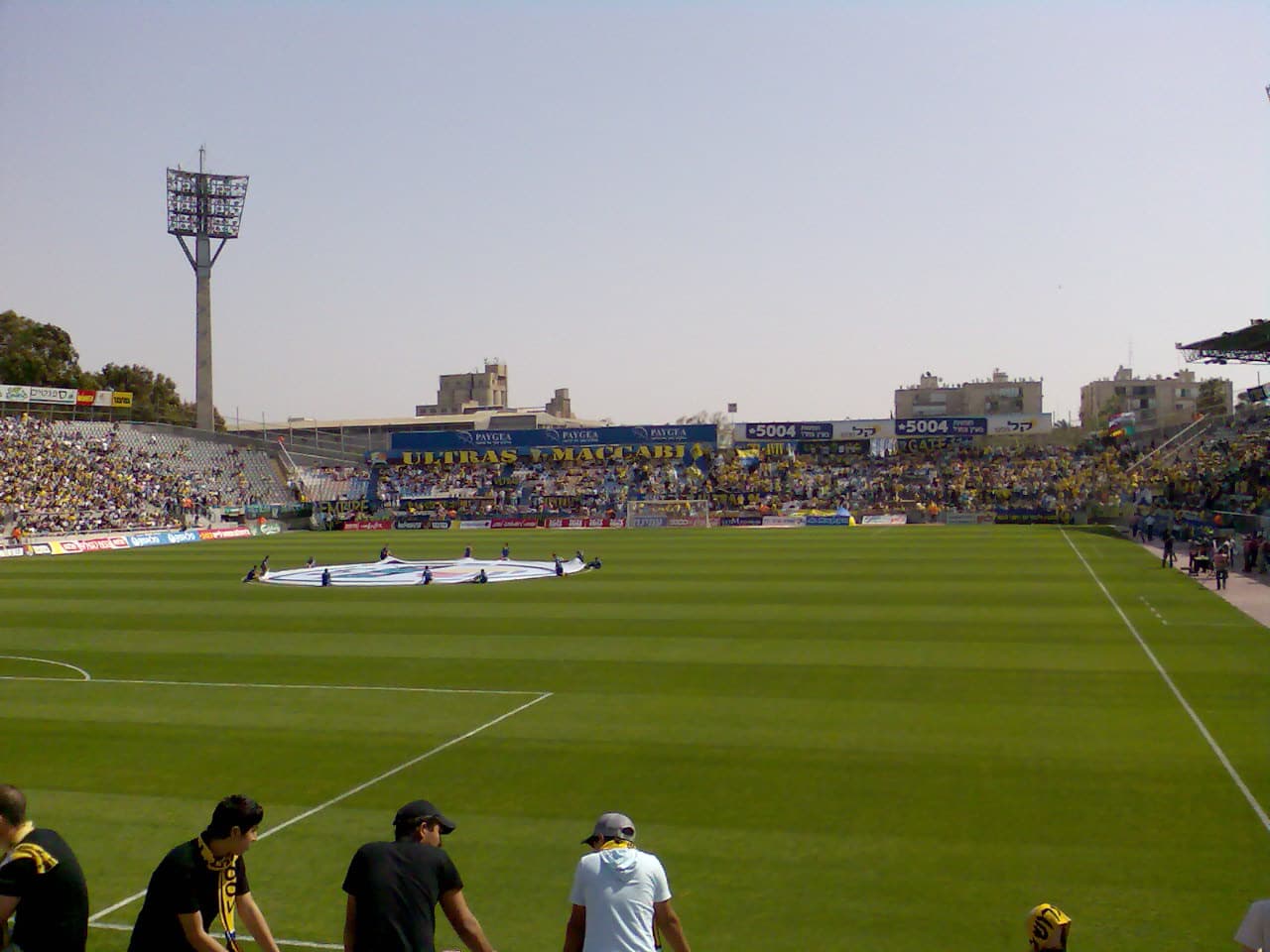
One quirk of Monday's venue may work in the visitors' favour, too. Sabah's own stadium holds roughly 10,000, but the second leg will be played at the larger Tofiq Bahramov Republican Stadium, which Kahat estimated at around 25,000 capacity — a switch he believes dilutes some of the home advantage Sabah would otherwise enjoy.
"If they show the courage and the playing style that has characterised them all season, they can advance," Kahat said of his old club, framing Monday's game as winnable rather than a formality despite the narrow lead. A win would send Be'er Sheva into the Champions League league phase for the first time — arguably the single biggest result in the modern era of the club.