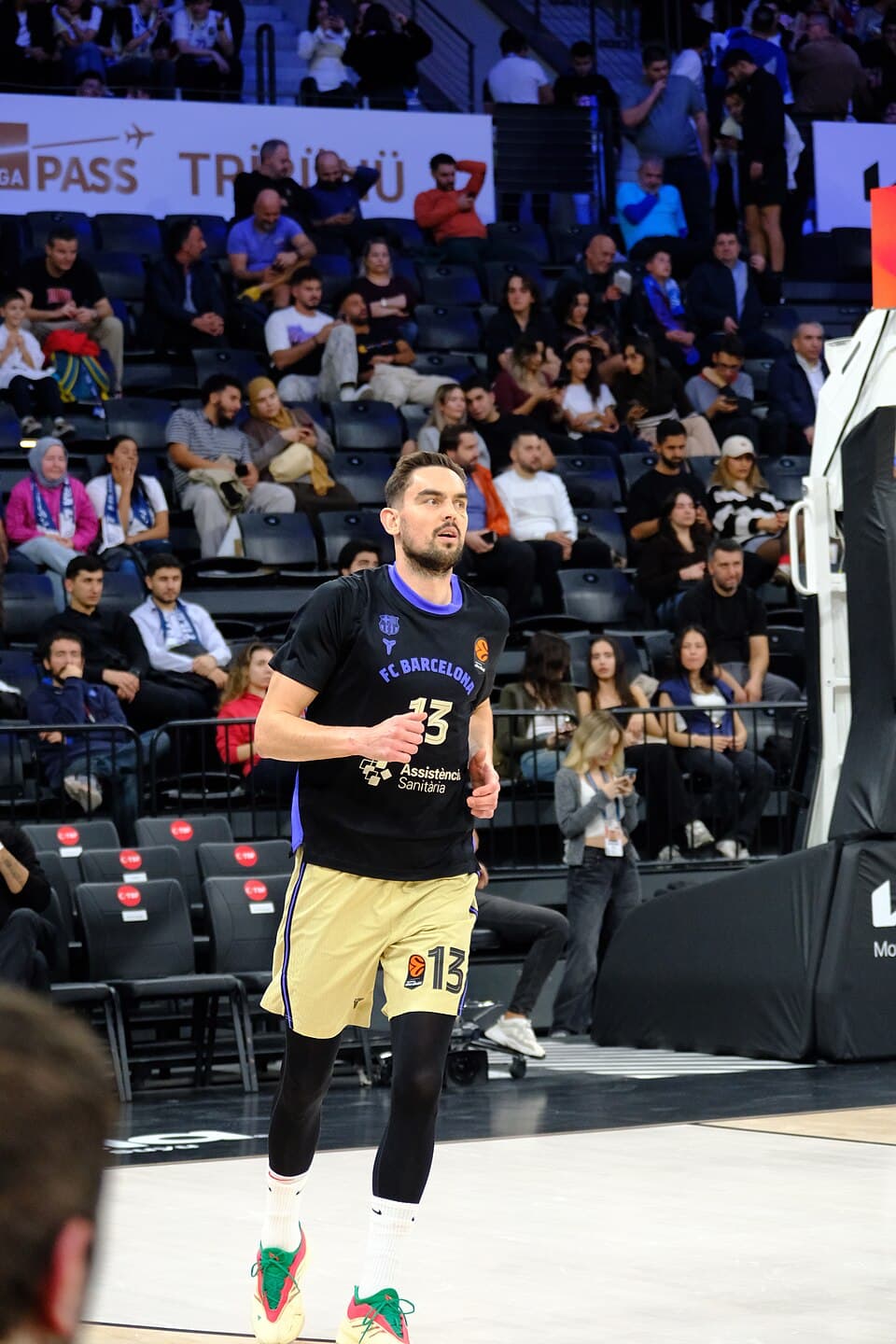
Tomas Satoransky says the move that took him from FC Barcelona to Hapoel Tel Aviv this summer came down to one simple calculation: he wanted to keep playing in the Euroleague, but he could no longer do it carrying the workload Barcelona had put on him.
"I wanted to stay in the Euroleague and reduce the load," the 34-year-old Czech guard said in an interview quoted by ONE. "That was the main motivation." He signed a one-year deal with Hapoel, reportedly worth around $1.5 million with an option for a further season, and is expected to slot in as the club's third guard in the rotation behind Dimitris Itoudis' first-choice ball-handlers rather than as the primary playmaker he was for much of his career.
The health picture behind the move is stark. Satoransky revealed he has been dealing with joint pain in his lower back for a year and a half, and that he sees no explanation for it beyond years of accumulated strain. "For the last year and a half I've suffered from joint pains in the lower back," he said, describing a cycle in which a heavy Euroleague workload — around 30 minutes a night at Barcelona — left him with little recovery time before Spanish league fixtures came around just days later, feeding what he called a domino effect of physical breakdown.
With only five non-EU players permitted on a Euroleague roster, clubs like Barcelona lean hard on that limited group across both European and domestic competition, and Satoransky suggested that squeeze was central to his physical decline. Reducing his minutes and sharing the guard workload at Hapoel, he indicated, was the only realistic way to keep playing at the level he wants without breaking down further.
He was notably blunt about his old club's board. "Barcelona was a huge disappointment in how the football club's management treated the basketball team," Satoransky said, pointing to a lack of reinforcement and investment in the roster that left the basketball section short-changed compared with the football operation. He spent four seasons in Catalonia, most recently averaging 7.0 points, 4.3 assists, 3.4 rebounds and 0.7 steals per game in EuroLeague action in 2025/26 while shooting 49.4 percent on twos and 48.9 percent from three.
By contrast, he described real enthusiasm for what he found waiting in Tel Aviv. "Now we have owners at Hapoel with vision, and we definitely want to win the Euroleague," he said — a rare, unguarded statement of ambition from a player who spent the better part of a decade at one of the competition's traditional powers before switching allegiances.
The family side of the decision mattered too, according to the interview: his wife backed the move and the change in lifestyle that comes with relocating to Israel, treating it as a shared decision rather than simply following his career.
Satoransky's arrival gives Hapoel Tel Aviv a EuroLeague-tested table-setter with a title résumé, even in a reduced role, as the club builds out its guard rotation for a season in which it has again set itself ambitious continental targets.