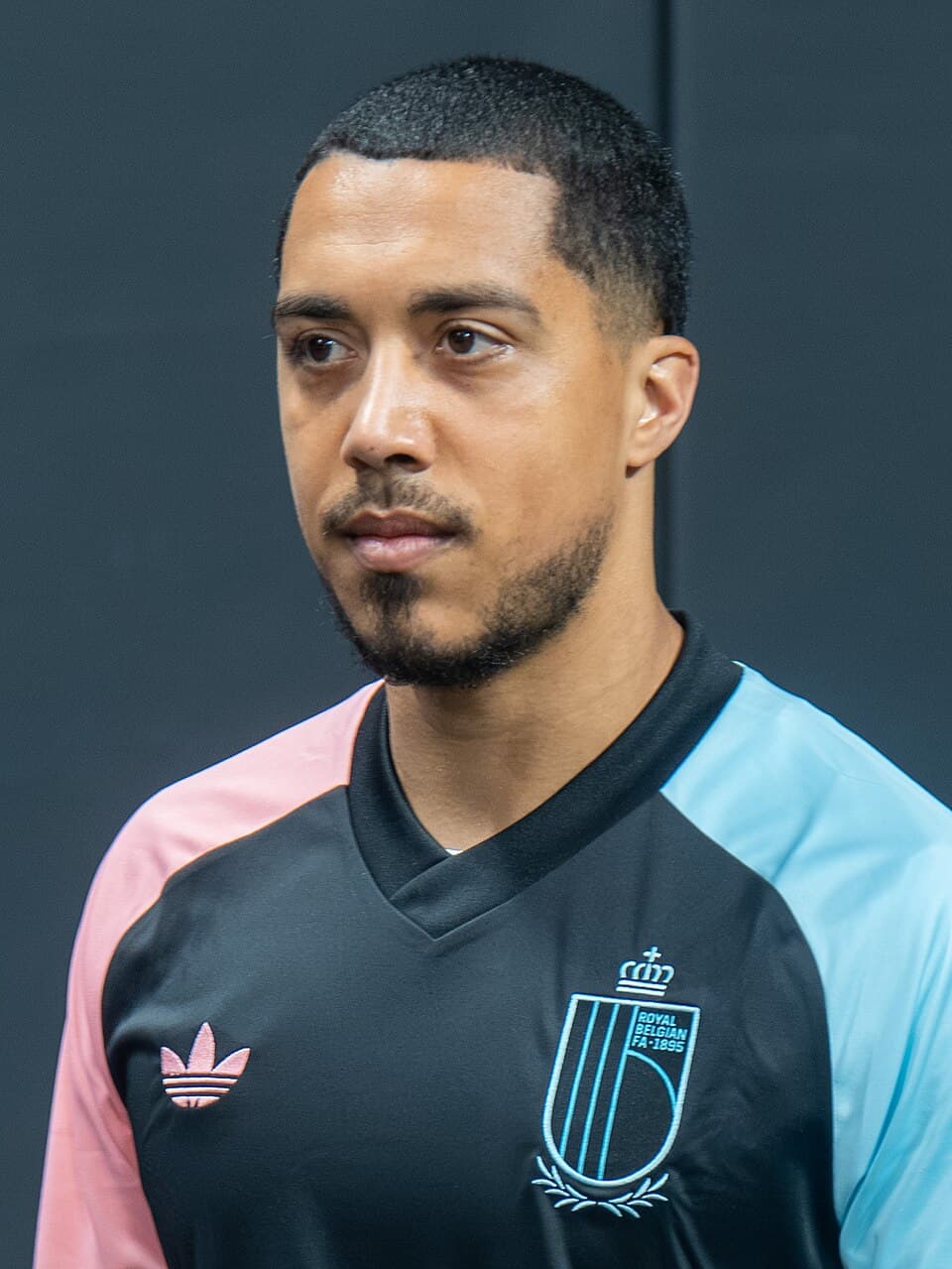
Manchester United have signed Youri Tielemans from Aston Villa on a contract running to June 2031, subject to registration. The agreement gives United five seasons of control over a 29-year-old midfielder whose value rests less on projection than on repeatable Premier League production. He arrives as Belgium's captain, a recent European trophy winner, and a player already accustomed to carrying possession through crowded central areas.
The price requires more care than the contract. A £35 million fee has been widely reported, but United did not publish a figure in their announcement, so the number should not be treated as a club-confirmed term. What can be stated without qualification is the length of the commitment: this is not a short bridge deal for an experienced player but an investment in Tielemans as part of the midfield's medium-term structure.
His final season at Villa supplies the obvious sporting case. Tielemans recorded seven Premier League assists, then helped Villa win the Europa League and scored the opening goal in the final against Freiburg. He followed that campaign by captaining Belgium to the 2026 World Cup quarter-finals. United list him on 90 senior international appearances, a body of work that sharply reduces the uncertainty around temperament, workload and elite-match exposure.
The more interesting question is what type of control United believe they have bought. Tielemans is not simply a high-volume creator who must be stationed close to the penalty area; his more valuable interventions often come earlier, receiving with pressure arriving, opening a passing lane with his first touch, and accelerating an attack without forcing a low-percentage ball. In a team that wants cleaner progression, those decisions can matter as much as the final assist.
That does not make him a one-man solution. A midfielder asked to dictate from deep needs protection behind the ball and runners ahead of it; a No. 8 given licence to advance needs a partner capable of holding the centre when possession turns over. Tielemans can perform parts of both roles, but flexibility is useful only when the surrounding responsibilities are clear. United's task is to build a midfield relationship, not merely insert a famous name into an empty square on a team sheet.
The contract also frames the risk. Tielemans enters at 29, an age at which United should expect immediate authority rather than a lengthy adaptation project. Five years protects continuity and, in theory, avoids returning to the market too soon, but it also carries the physical and financial exposure that accompanies any long agreement with an established player. The deal will be judged by the quality of his prime seasons, not simply by whether he remains available at its end.
Tielemans described the move as the culmination of years of work and pointed to United's ambition to compete for major trophies. Director of football Jason Wilcox emphasised his consistency, technique and mentality. Those qualities fit the logic of the recruitment: after a season in which he influenced league matches and a European final, United are paying for a player expected to stabilise important phases immediately, not one who may eventually learn how to do so.
Registration and pre-season integration now come before the tactical verdict. Tielemans could become the controlling passer in a pair, the forward-moving member of a three, or a hybrid midfielder whose starting position changes with the opponent. The most convincing version will not ask him to perform every central-midfield function at once. United have secured an experienced organiser through 2031; the decisive work is to give that organiser a coherent platform.