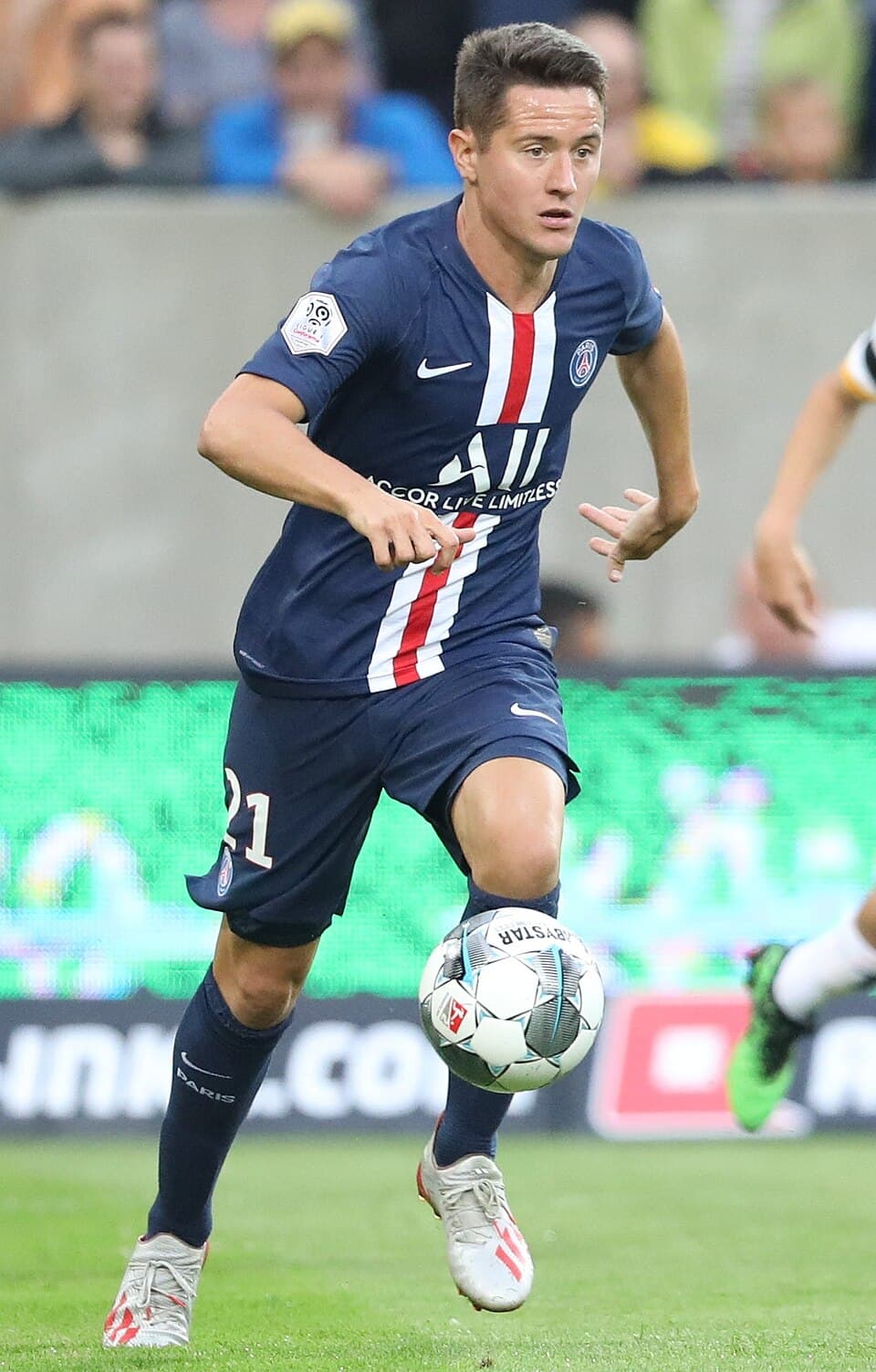
Ander Herrera is going home. The 36-year-old Basque midfielder has left Boca Juniors and signed for Real Zaragoza, the club where he was formed as a teenager, on a one-year deal that will see him play in Spain's third division for the first time since he broke through there in the mid-2000s.
The move closes a loop. Herrera left Zaragoza for Athletic Bilbao in 2011, then spent five years at Manchester United and four more at Paris Saint-Germain before a spell in Argentina with Boca Juniors, where he departed after a change of coaching staff left him without a role in the squad, according to ONE.
He returns to a club in crisis. Zaragoza finished bottom of the Spanish second division last season with just 36 points from 42 matches, sealing relegation to the third tier after 77 years spent almost entirely in the top two flights of Spanish football.
"Zaragoza is my life," Herrera said, according to ONE. "I'm fulfilling an old dream, and I'll do the maximum to restore it to greatness. In ten years, it should be back in the first division and even competing for titles. That's how it must be."
The financial terms underline the sentimental nature of the move. Spanish federation rules require a minimum salary of around €25,000 for a registered professional, but ONE reports that Herrera has arranged for that money to be redirected straight into a club rehabilitation fund rather than taking it as personal pay.
Independent Spanish outlets, including Aragón Digital and Cope, confirmed the core of the deal on 14 July: Herrera signed to lead the new project at Zaragoza, with the explicit target of pulling the club out of what one report called "the hell of the Primera RFEF."
ONE frames the transfer as a direct echo of Santi Cazorla's celebrated 2023 return to Real Oviedo, another boyhood homecoming built on a reduced financial arrangement. Cazorla took the Spanish football minimum wage and waived his image rights so that ten percent of shirt-sale revenue would go to Oviedo's youth academy, before leading the club back to La Liga two seasons later.
Whether Herrera can engineer anything close to that turnaround from the third tier is another matter. Zaragoza's fall has been sharp: a club with two European trophies and a Copa del Rey as recently as 2004 has spent over a decade sliding through Spanish football's middle tiers before finally dropping out of the professional pyramid's top two divisions altogether.
For Herrera, who captained Athletic Bilbao's academy generation before his big move and went on to lift the Europa League with United and multiple Ligue 1 titles with PSG, this is described in his own words as one last project rather than a retirement lap — a bid to give something back to the club that made him.