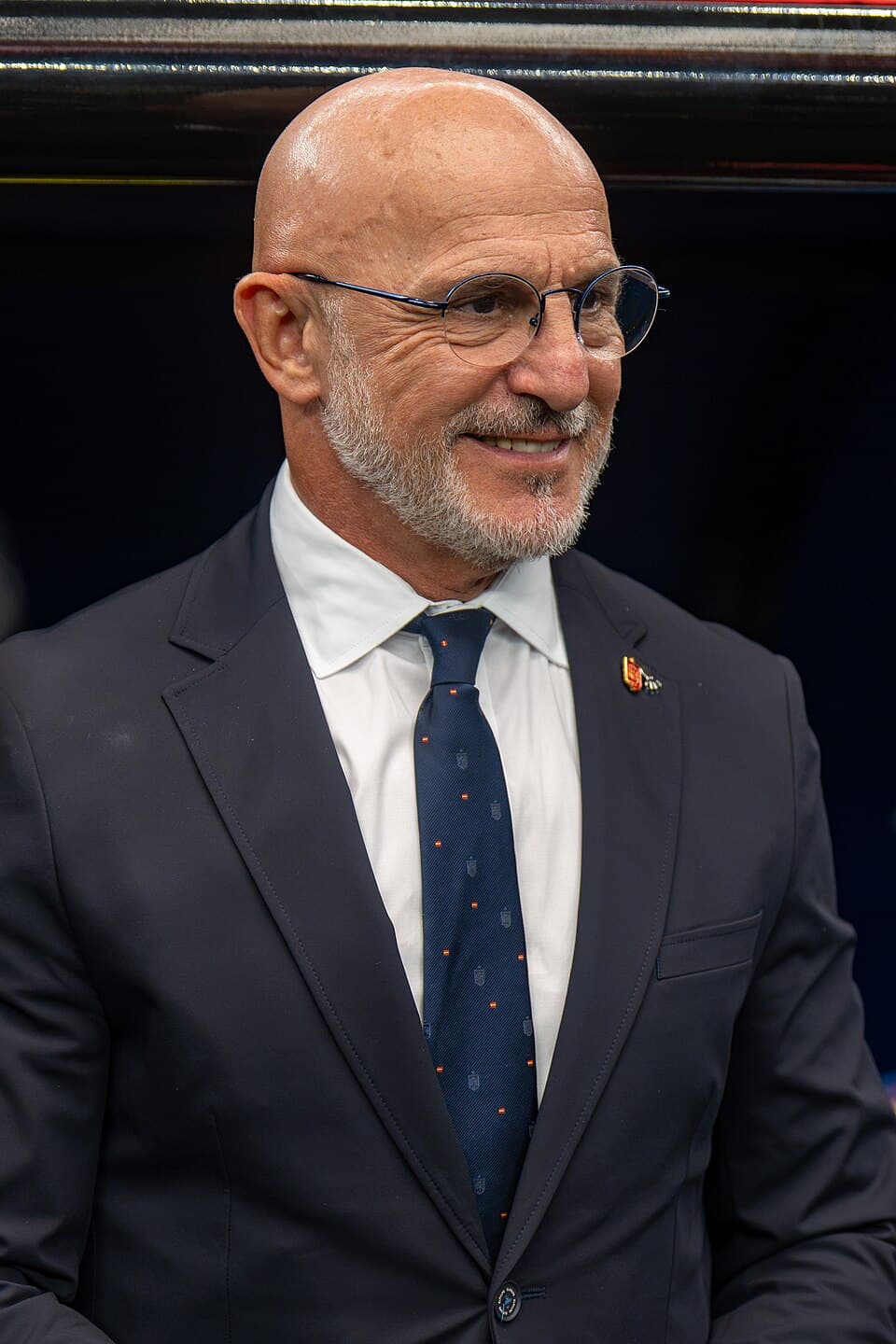
Ten days after Spain lifted the World Cup, Luis de la Fuente is still trying to deflect the spotlight away from himself and onto the players who won it. Asked in an interview with ONE about the growing habit of calling the tournament "his" World Cup, the 65-year-old coach did not hide his discomfort.
"It makes me blush," De la Fuente told ONE, "but I want to remind everyone this is the World Cup of a wonderful national team." It is the kind of answer that has defined his four years in charge — credit pushed outward, rarely inward.
The numbers behind that modesty are startling. Spain conceded just a single goal across the entire tournament and, according to De la Fuente's own account to ONE, faced only around ten shots on target in eight matches — a defensive record no previous champion has matched. He described 52 days on the road, from base camp to final, without a single internal problem disrupting the group.
The trophy itself was won the hard way. Spain beat holders Argentina 1-0 after extra time at MetLife Stadium in New Jersey on July 19, with Ferran Torres converting from close range 39 seconds into the second period of extra time to break a stubborn Argentina side down to ten men. It was Torres' only goal of the tournament, and the third World Cup goal of his career.
The win made Spain champions for the second time, sixteen years after their maiden triumph in 2010, and completed a rare Euro-World Cup double following their 2024 European Championship win. It also made La Roja the first nation to hold both the men's and women's World Cup at once, with the women's team having won in 2023, and it made De la Fuente, at 65, the oldest coach ever to guide a team to the men's title.
In the interview, De la Fuente singled out his youngest players for praise. He described the contributions of Lamine Yamal and Pau Cubarsí — both still teenagers during the tournament — as central to the way Spain played, combining defensive discipline with the attacking freedom that has become the team's trademark under him.
He also used the platform to defend Ferran Torres, who arrived at the tournament under heavy criticism from pundits and supporters over his club form, only to score the goal that decided the final. For De la Fuente, that arc is proof of a coaching philosophy he says is non-negotiable.
"No one has a fixed place, regardless of how long they have been here," he told ONE, explaining that even senior figures such as goalkeeper are picked on current form and consistency rather than reputation. He said his selection decisions are guided by "fairness and honesty, not by names or by age."
Character, he added, matters as much to him as ability — a principle he said applies as much to established internationals like Martín Zubimendi, Éric García, Álvaro Morata and Dani Carvajal as it does to the tournament's breakout stars.
For a coach who has now won a European Championship and a World Cup back to back, De la Fuente's insistence on sharing the credit is unlikely to be taken at face value by everyone in Spain. But as he made clear to ONE, it is the version of the story he intends to keep telling.