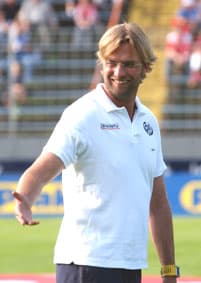
Jürgen Klopp has begun the job that, in the country he left as a player and the one he still calls home, felt inevitable from the moment Germany's World Cup collapsed. ONE's report captures the mood surrounding his unveiling as national team head coach: after years of carefully non-committal answers about a return to the touchline, Klopp has finally said yes to the job the entire country wanted him to take.
His appointment closes weeks of speculation that opened the moment Julian Nagelsmann resigned, immediately after Germany's shock Round of 32 exit from the 2026 World Cup, beaten by Paraguay on penalties. The manner of that collapse, a fancied German squad undone by a side ranked far below them, left the federation searching for more than a tactician. They wanted someone who could restore belief in the shirt.
Klopp has signed through the 2030 World Cup, a deal that also covers Euro 2028, with his tenure formally starting on 15 August 2026. It is a four-year commitment to a team he has never coached at any level, arriving instead with the standing of a man who rebuilt two clubs from crisis into champions.
He brings with him a staff drawn heavily from his Liverpool and Dortmund years. Peter Krawietz, 54, joins from the Red Bull group, having worked alongside Klopp at Mainz, Dortmund and Liverpool for close to two decades and shared in the 2019 Champions League and 2020 Premier League triumphs. Pepijn Lijnders, 43, the Dutch coach who was Klopp's closest lieutenant at Anfield before a recent spell assisting Pep Guardiola at Manchester City, also returns to his side.
Sven Bender, 37, completes the group. He played under Klopp for six years at Dortmund, later coached Germany's under-16 and under-17 sides between 2022 and 2024, and is the only member of the new staff with senior caps for the national team itself.
It amounts to Klopp importing much of the machinery that won him a Champions League and ended Liverpool's 30-year wait for the English title, now dropped into a very different kind of job: not weekly club management, but the periodic assembling of a national squad between major tournaments.
Before Germany, Klopp spent two years away from coaching as Red Bull's global head of soccer, overseeing the group's network of clubs, and worked as a World Cup commentator earlier this year. Those close to him always maintained his retirement from the touchline was a pause rather than an ending, and that the German job in particular had never stopped tempting him.
At Dortmund, he inherited a club sitting 13th in the Bundesliga in 2008 and turned it into back-to-back champions in 2011 and 2012, playing a pressing style that reshaped how the league's biggest clubs approached the game. That reputation, as much as any single trophy, is why the German federation is betting he can drag its national team out of its worst run in a generation.
Ynet, Sport5 and Walla had all reported the deal as good as done in the days before Friday's formal confirmation, with Sport5 describing an agreement in place well before the presentation itself. ONE's framing, that all of Germany had been waiting for this appointment, reflects just how starved the country's football public has been for a unifying figure since Nagelsmann walked away.