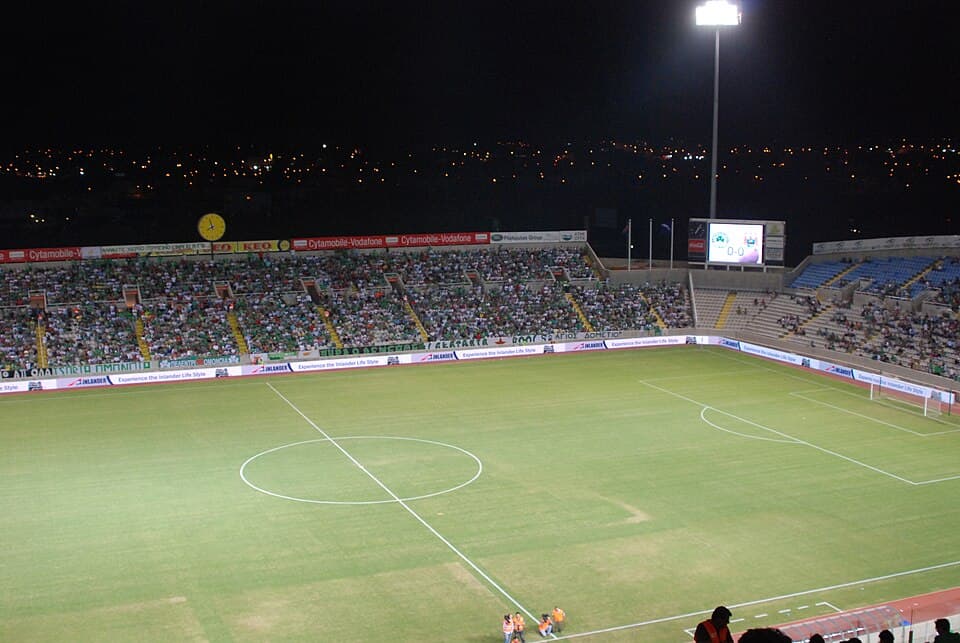
The strangest thing about the greatest night in Maccabi Haifa's European history is that it did not happen in Haifa. It happened 250 kilometres across the Mediterranean, at the GSP Stadium in Nicosia, where Israel's champions were obliged to stage their 'home' fixtures. On 29 October 2002, in that adopted arena, Haifa beat Manchester United 3-0 in the group stage of the Champions League — a result contemporaries immediately called perhaps the finest ever recorded by an Israeli team in European competition.
The exile itself was part of the story. Haifa had made history that autumn simply by arriving: the first Israeli club ever to reach the Champions League group stage. But with the second intifada raging at home, UEFA refused to sanction matches in Israel on security grounds and forced the club to find a neutral venue abroad. Cyprus was the nearest willing host, and so a landmark campaign for Israeli football unfolded with its home crowd reduced to those supporters willing and able to make the short flight to Nicosia.
There had already been a taste of what this team could do. On the opening matchday at Old Trafford in September, Yaniv Katan had silenced 60,000 people after eight minutes — the first goal by an Israeli club in the Champions League group stage. United recovered emphatically, winning 5-2, with Ryan Giggs, Ole Gunnar Solskjaer, Juan Sebastián Verón, Ruud van Nistelrooy and a late Diego Forlán penalty overwhelming the visitors despite a second Haifa goal from Raffi Cohen. The scoreline stung, but the eight minutes mattered: Haifa had shown they would attack anyone.
By the time the return fixture came around, Sir Alex Ferguson's side had already secured their passage to the second group stage, and he used the occasion to rotate. Yet this was hardly a scratch team. Rio Ferdinand, Paul Scholes and Solskjaer all started, Forlán led the line, and the young goalkeeper Ricardo was given a night's work he would not forget. Against them, Itzhak Shum — who had taken over from Avram Grant that summer — sent out the core of his double-winning side: Dudu Aouate in goal, Arik Benado and Walid Badir in front of him, Katan and the Nigerian striker Yakubu Aiyegbeni in attack.
The breakthrough came five minutes before the interval, and it belonged, fittingly, to Katan. Picked out by Raimondas Žutautas, he skipped past John O'Shea and lashed his finish beyond Ricardo. If Old Trafford had been a cameo, this was the full performance: Haifa pressing, passing and believing against the champions of Europe of only three years earlier.
Eleven minutes into the second half, Žutautas turned provider into scorer, the Lithuanian midfielder striking spectacularly from long range to double the lead. Then, with thirteen minutes remaining, Yakubu completed the night from the penalty spot. Three-nil, and the Spanish referee Antonio López Nieto's final whistle confirmed a scoreline that flashed around Europe looking like a misprint: Maccabi Haifa 3, Manchester United 0.
The context made it heavier still. United had not lost a Champions League match in more than a year — not since Deportivo La Coruña won at Old Trafford in October 2001 — and it was the first time in over two years they had failed to score away from home in the competition. That the defeat was administered by a debutant club playing in a borrowed stadium, by a team assembled for a fraction of United's wage bill, was precisely what made the evening reverberate.
Haifa's campaign ended in honourable third place in Group F, with seven points — level terms with the continent's establishment, ahead of Olympiacos and behind only United and Bayer Leverkusen — and with it a parachute into the UEFA Cup. The season had a bittersweet coda: Shum's team surrendered the Israeli title to Maccabi Tel Aviv on goal difference, and the coach left for Greece that summer, where he promptly won a double with Panathinaikos.
More than two decades on, the Nicosia result remains the benchmark against which every Israeli European campaign is measured. Katan stayed to become a one-club Haifa icon; Yakubu's penalty was an early flourish from a striker England would soon come to know well; Aouate went on to a long career in Spain. And the match itself endures as a peculiarly Israeli kind of triumph — a famous home win that no one ever saw at home, delivered by a team that had to leave its country to show what its country's football could do.