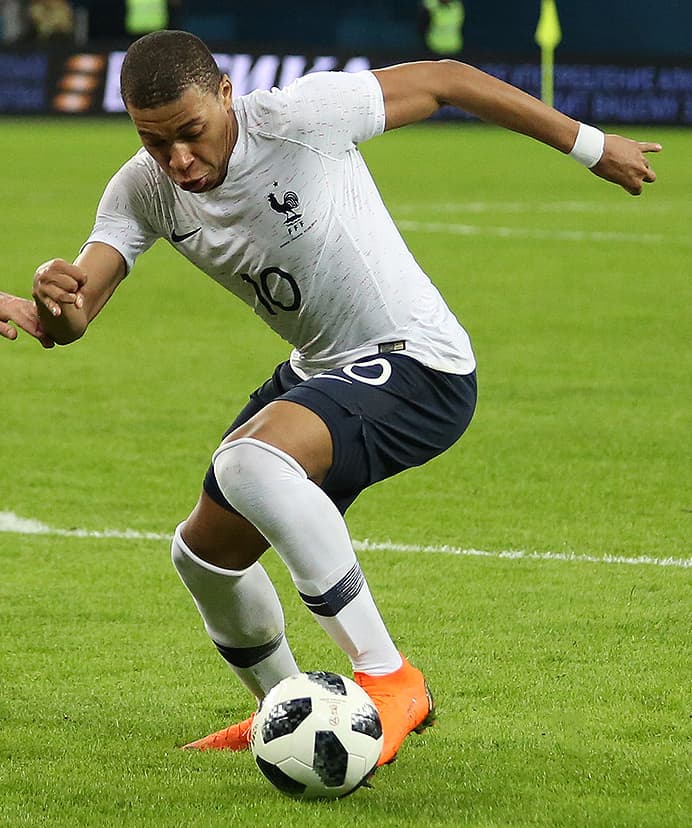
England's top flight has never turned over its technical areas this fast. Nine of the Premier League's 20 clubs begin the 2026/27 season with a manager who wasn't in the dugout twelve months ago — the most first-time bosses on an opening weekend since 1946/47, according to Opta data reported by Sky Sports. ONE's football desk poses the obvious question as the season kicks off: can this new generation actually handle the pressure that comes with the job?
The headline change is at Manchester City, where Enzo Maresca has taken over from Pep Guardiola after his decade of dominance at the Etihad. Maresca arrives from Chelsea, and replacing a manager who redefined the modern game is an entirely different test to any he has faced before.
At Liverpool, Andoni Iraola has succeeded Arne Slot, arriving after three well-regarded seasons at Bournemouth that established him as one of the most sought-after young coaches in English football. He inherits a squad — and a fanbase — with little patience for teething problems at a club that expects to compete on every front.
Xabi Alonso's move to Chelsea completes the picture at the traditional 'Big Six' clubs that changed manager this summer. The Spaniard was dismissed by Real Madrid before Chelsea turned to him — a club that has cycled through managers with more regularity than almost any other in the competition. Survival, more than instant silverware, will define whether he has withstood the pressure.
Manchester United actually made their change first. Michael Carrick was confirmed as permanent manager in May, on a contract through 2028, after steering United to 11 wins from 16 matches as interim following Rúben Amorim's sacking in January — form that secured Champions League qualification and effectively won him the job outright.
Beyond the elite clubs, the churn runs right through the division: Bournemouth, Crystal Palace, Fulham, Ipswich Town, Newcastle United and Nottingham Forest have all made changes of their own, taking the league-wide total of new appointments to nine.
The numbers underline how thin patience has worn across the competition. The average managerial tenure heading into the new season, across all 20 clubs, is just 474 days — the lowest opening-day figure of the Premier League era, Sky Sports reported.
The incoming cohort is also unusually young. The average age of a Premier League manager this season is 47.1, the youngest group in twenty years, evidence that clubs are increasingly betting on energy and adaptability over experience in what is now one of the most demanding jobs in world football.
The exception that proves the rule sits at Arsenal, where Mikel Arteta — in the post since December 2019 — is now the division's longest-serving manager by a distance, having overseen 2,432 days in charge. That kind of continuity has become the rarity rather than the norm.
For Maresca, Iraola, Alonso and Carrick, the theory going in is straightforward enough: work the group hard, press from the front, set the tone early. Whether any of that survives contact with a genuine title race, an injury crisis or a bad November is the question ONE's preview leaves hanging over the division as a new era begins.