Eilat produces desert heat, not swell, but it has always had wind — and it was on the flat, gusty water off Israel's southernmost city that a seven-year-old named Shahar Zubari first stood on a board, taught by his father, Ze'ev "Poodle" Tzuberi, a windsurfing instructor who ran a small operation on the Red Sea shore. By his teens Zubari was already winning age-group world titles; by 2004 he was a world youth silver medalist. The talent was never in question. What Beijing would test was his nerve.
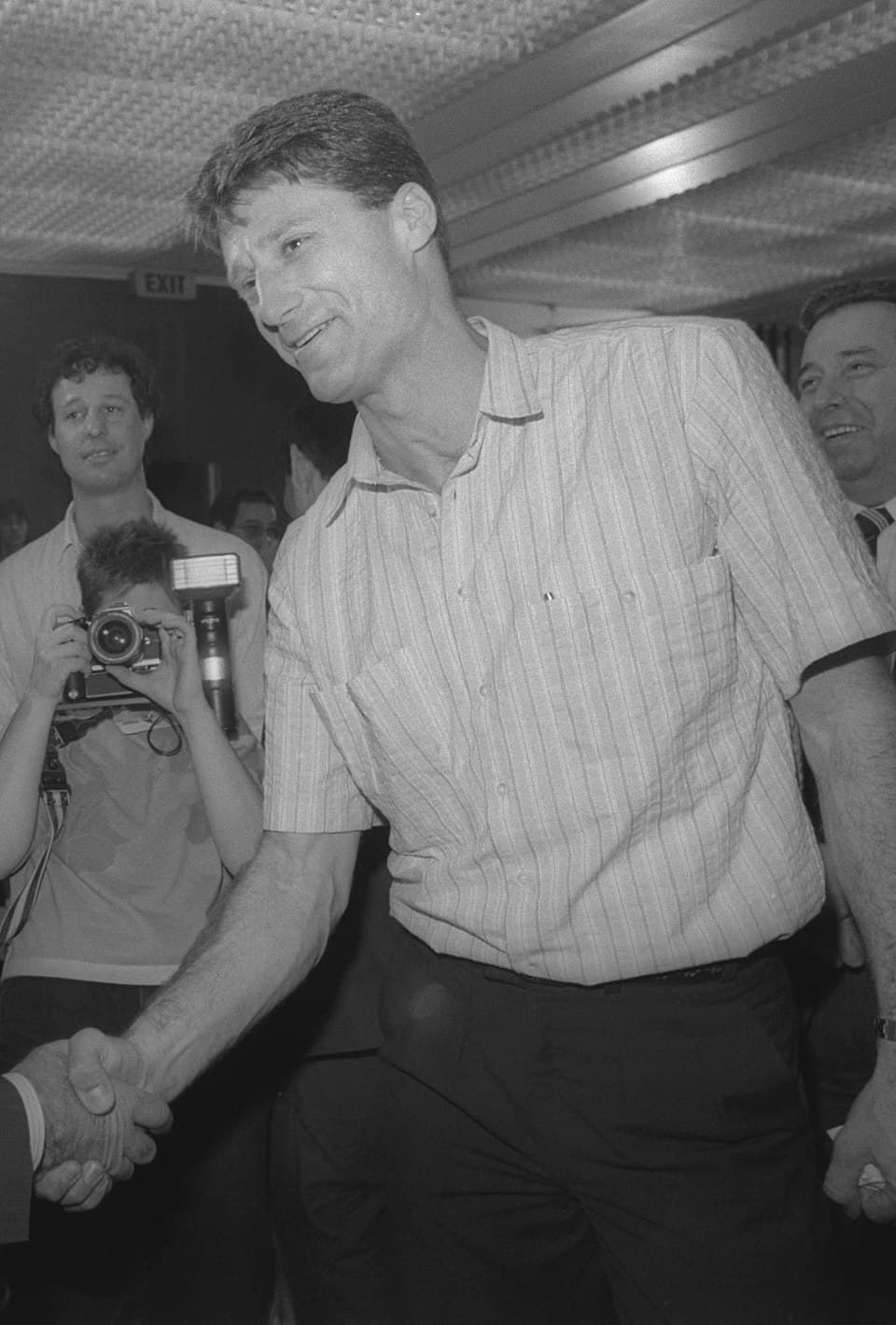
Getting to the 2008 Olympics required beating a legend first. Israel's windsurfing berth for the RS:X class came down to a domestic trial against Gal Fridman, the sailor who had given Israel its first Olympic gold in Athens four years earlier. Zubari, only 21, won the selection — a result that startled a sport where Fridman was still the reigning name in Israeli sailing, and one that put real weight on the younger man's shoulders heading into China.
He arrived at the Qingdao Olympic Sailing Center with form to justify the pressure. Earlier in 2008 he had taken bronze at the RS:X World Championships in Auckland, and once racing began off Qingdao he looked, briefly, like a contender for gold: a win in race one, a third in race two, an early share of the fleet lead in a 35-strong, 35-nation field sailing eleven races, the last of them a winner-take-all medal race for the top ten.
Then the regatta turned. Zubari's series buckled through the middle rounds — a 17th, a 6th, a 19th, an 18th — the kind of run that, in a fleet this deep, can erase weeks of good sailing in a single bad afternoon on the water. Qingdao's Olympic sailing venue was notorious that August for light, fickle breeze; two days of racing were postponed altogether for lack of wind, and the unpredictability punished anyone who lost their rhythm. By the time the fleet reached the closing races, Zubari had slipped outside the automatic medal picture.
He answered with the two results he needed most: a win in race nine, then a fourth in race ten, hauling himself back into the top ten and, crucially, into the ten-boat medal race — sailing's version of a shootout, where points are doubled and nothing from the preceding week can be banked.
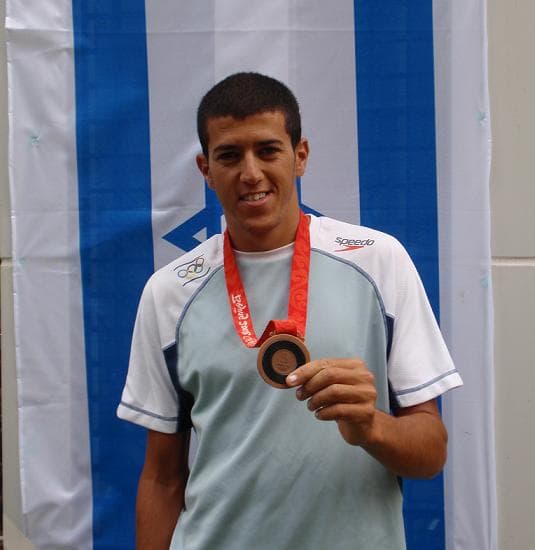
On 20 August 2008, the fleet went out for that medal race with New Zealand's Tom Ashley holding a slender overall lead over France's Julien Bontemps, and Zubari needing to beat enough of the fleet to hold off Britain's Nick Dempsey for third. He sailed to second place in the medal race itself — enough. Ashley took gold with 52 net points, Bontemps silver with 53, and Zubari bronze with 58, edging Dempsey, who finished on 60.
It was a podium finish worth more to Israel than the ranking suggests. Zubari's bronze was the only medal the country won at the entire Beijing Olympics — no gold, no silver, one bronze, from an Israeli team of more than forty athletes across a dozen sports. For a small nation whose Olympic medal count could then still be counted comfortably on two hands, a single medal from a single sailor carried the weight of the whole Games.
The story did not end in Qingdao. Zubari went on to win consecutive European Championship titles in 2009, sailed at home in Tel Aviv, and in 2010 in Sopot, Poland, and returned to the Olympics twice more, at London 2012 — where he carried the Israeli flag at the opening ceremony — and at Rio 2016, becoming a three-time Olympian in his class.
But it is the Qingdao bronze that remains the defining image: a 21-year-old from Eilat, having beaten his own gold-medal-winning predecessor just to make the team, dragging himself back from the wrong side of the leaderboard to give Israel the only colour it would take home from Beijing.