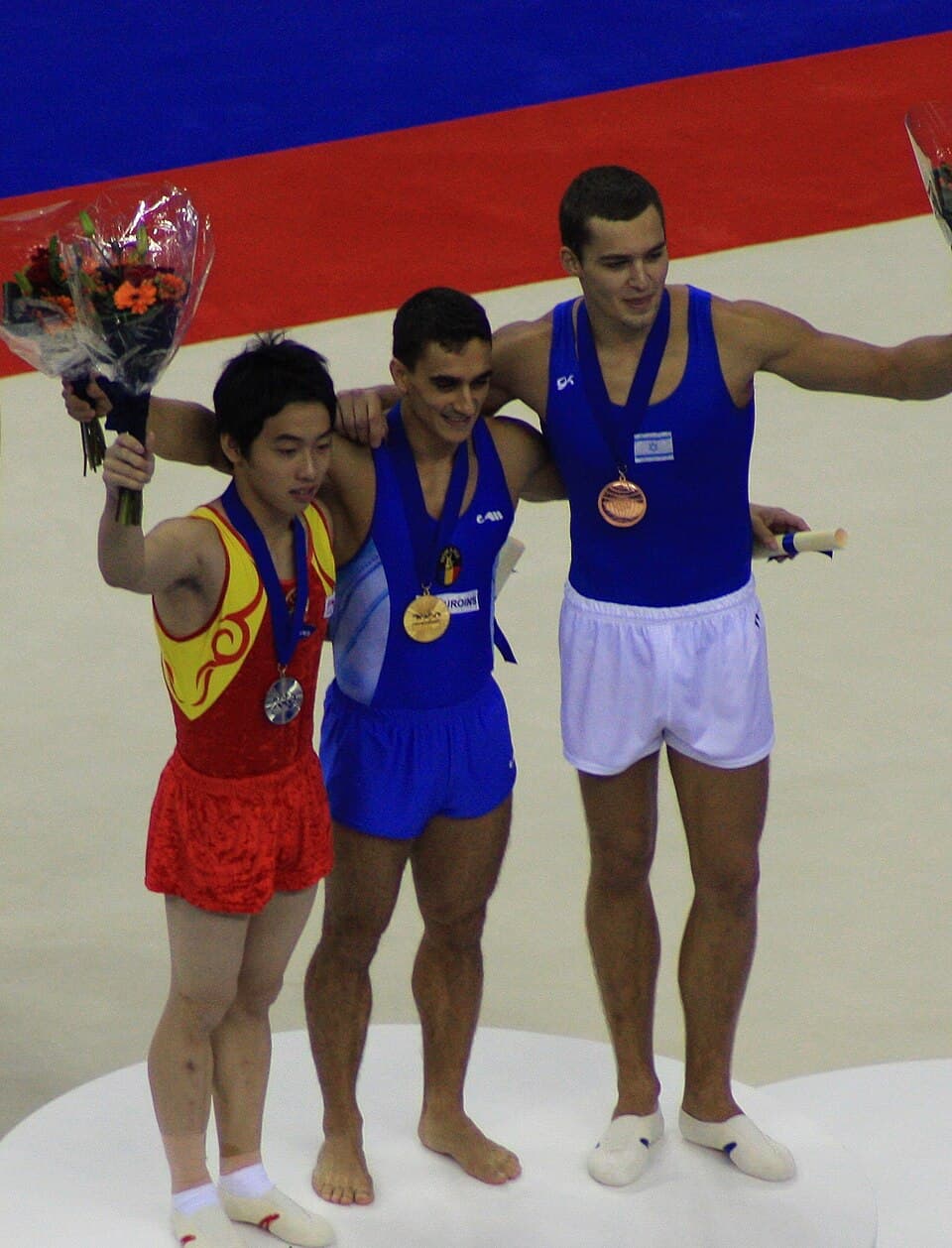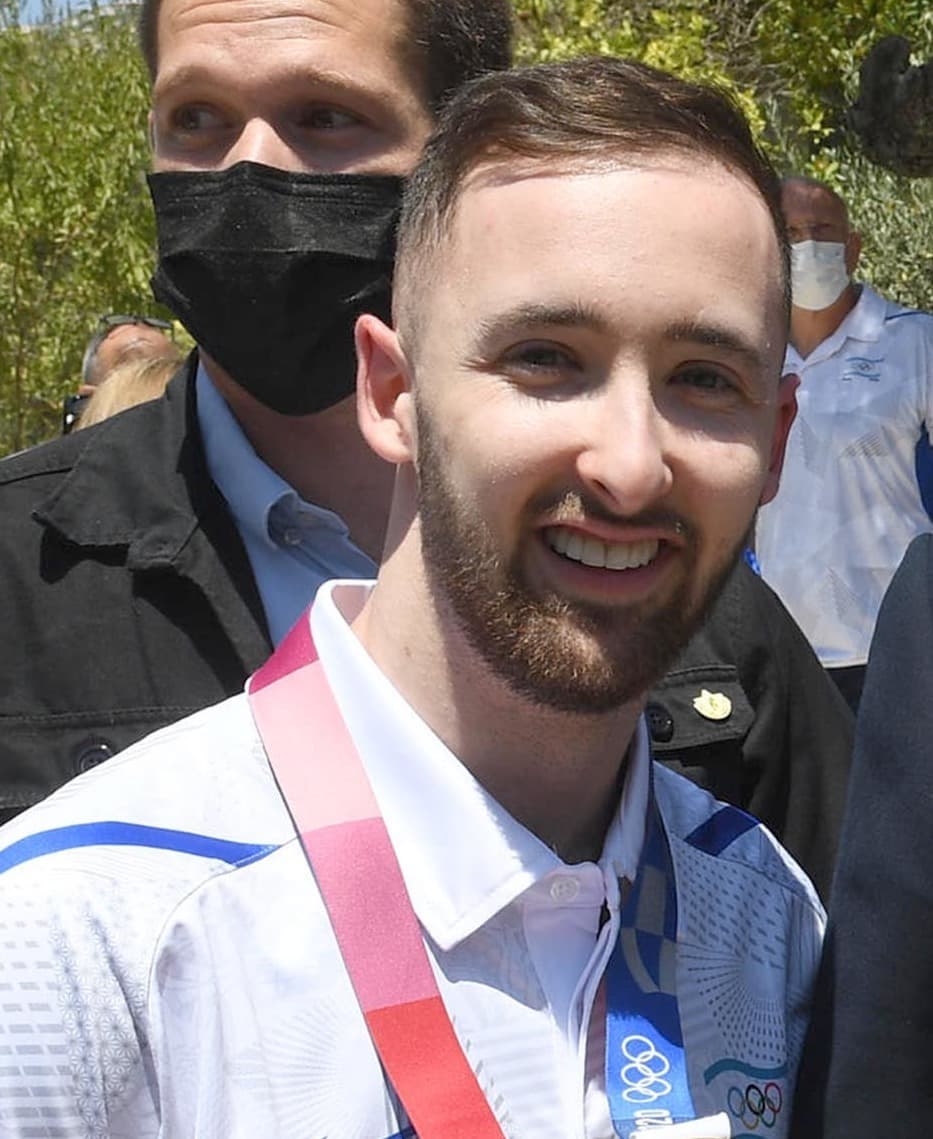
The scoreboard at the Ariake Gymnastics Centre did something strange that afternoon: it produced a tie for the gold medal, and then, a few tense seconds later, it produced a winner. Artem Dolgopyat, a 24-year-old born in Dnipro, Ukraine, and raised in Rishon LeZion, had just finished his floor exercise routine at the Tokyo Olympics with a score of 14.933. Spain's Rayderley Miguel Zapata, competing later in the same final, matched it exactly: 14.933.
Under FIG tie-break rules, when two totals are identical the routine with the higher declared difficulty score is awarded first place. Dolgopyat's exercise carried the steeper degree of difficulty, and by that margin — not by execution, not by artistry, but by a technical coefficient buried in the code of points — he became Olympic champion. China's Xiao Ruoteng took bronze.
It was only Israel's second gold medal in Olympic history, following windsurfer Gal Fridman's victory in Athens in 2004, and it was the country's first-ever Olympic medal in gymnastics of any color. In Jerusalem, Prime Minister Naftali Bennett interrupted a cabinet meeting to relay the news; President Isaac Herzog called it a moment that would be remembered for generations.
Dolgopyat himself seemed almost apologetic about how he'd won it. "I didn't do the best routine," he said afterward. "I did the routine much better in the qualifying round." It hardly mattered. "I don't really have the words, I am still in heaven," he told reporters, before adding, in the disarming way that would define his public persona for years afterward, that he wanted to thank everyone who had helped him get there.
The journey to that podium had begun far from Tel Aviv. Dolgopyat started gymnastics at six, in Dnipro, encouraged by his father Oleg, himself a former gymnast. At twelve, his father told him the family was moving to Israel. "I knew we were Jewish," Dolgopyat later recalled, "but we didn't celebrate the holidays, and until that moment I hadn't even heard of Israel."
The adjustment was not easy. "For the first two months I sat in class in Rishon Lezion and didn't understand a word," he said, until a transfer to a school with Russian-speaking teachers eased the isolation. Gymnastics became the constant that carried him through it: "For me gymnastics was always the most important — it's what I did all the time and what helped me acclimate to Israel."
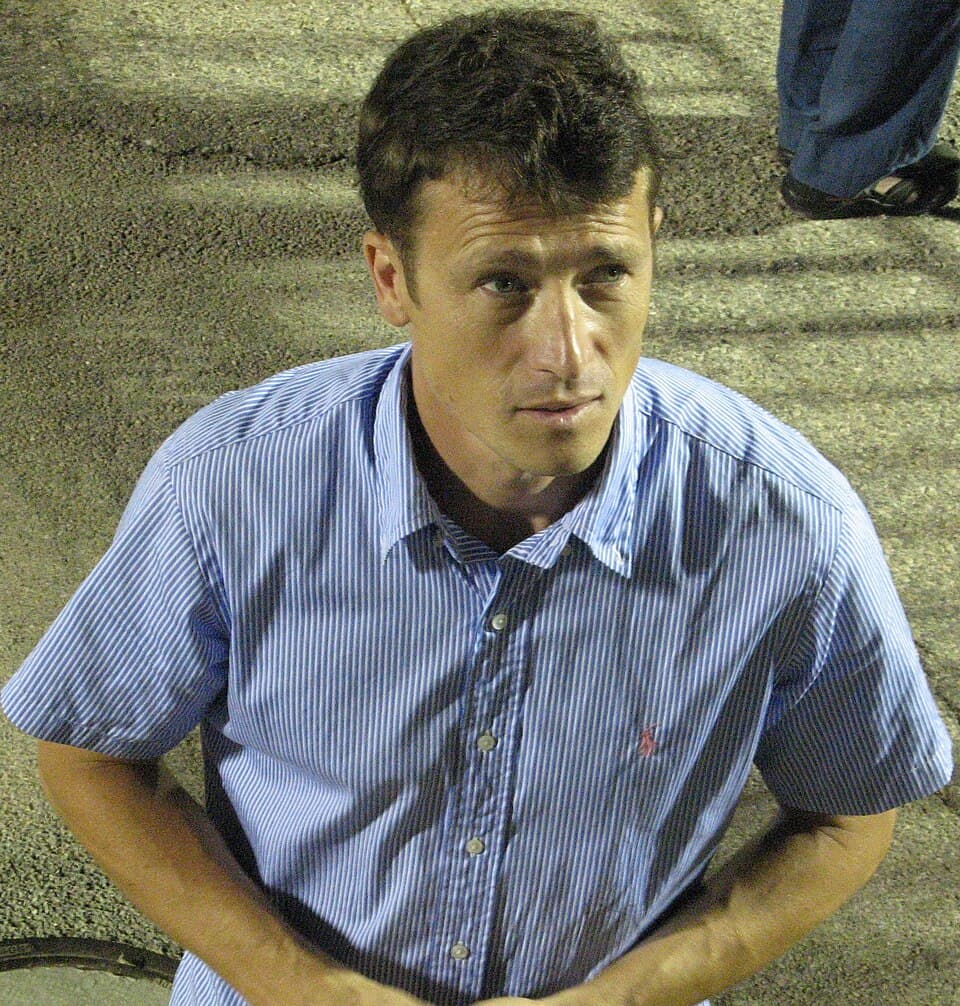
He built his career through the Israeli system from there — mandatory IDF service balanced against training under coach Sergei Vaisburg, with fellow Israeli floor specialist Alex Shatilov serving as an early mentor. The results accumulated steadily rather than suddenly: silver at the 2017 World Championships in Montreal, silver again at the 2019 Worlds in Stuttgart, gold at the 2020 European Championships in Mersin. Tokyo was the culmination, not a bolt from nowhere.
Vaisburg, watching from the stands, put it plainly afterward: "We were prepared for a medal, but of course we didn't expect the gold. That is a dream." For a small country whose Olympic medal cabinet had, until that afternoon, held exactly three pieces of silverware in judo and windsurfing, a gold decided by a tie-break in gymnastics was a new kind of history — earned in a sport Israel had never before medaled in at all.
The story did not end at Ariake. Two years later, in Antwerp, Dolgopyat became world champion on floor for the first time, and at the Paris Olympics in 2024 he returned to add a floor exercise silver to his collection — proof that the Tokyo gold, however narrow its margin, had been no fluke. But it is the tie-break in the summer of 2021, the identical scores on the board and the single decimal that separated a Ukrainian-born boy from Rishon LeZion from the rest of the world, that remains the moment Israeli sport marks as the turn.