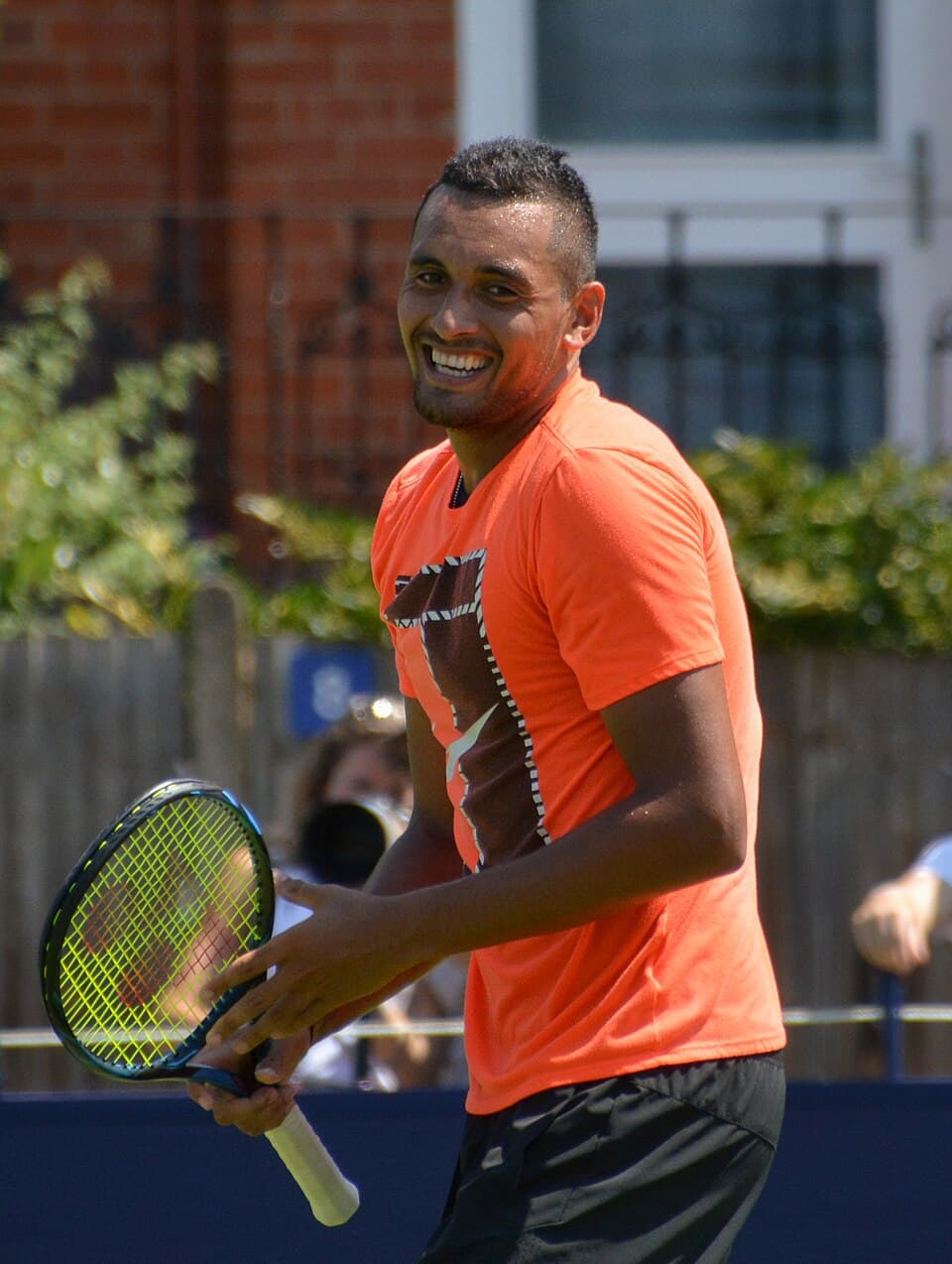
Andy Roddick has turned on Nick Kyrgios, accusing his fellow Australian-baiting compatriot of rank hypocrisy just days after Kyrgios himself was provisionally suspended for testing positive for cocaine.
Speaking on his own 'Served with Andy Roddick' podcast, the former world No. 1 said he had held his tongue for months while Kyrgios repeatedly attacked Jannik Sinner and Iga Swiatek over their own doping cases, but felt compelled to respond now that Kyrgios is facing punishment of his own.
"It's just hypocritical. It's purely hypocritical," Roddick said, according to ONE. "The part that I have an issue with is the hypocrisy with which he picks and chooses."
Kyrgios was provisionally suspended by the International Tennis Integrity Agency on 4 August after a sample he provided during a tournament in Mallorca in June returned a positive test for benzoylecgonine, a metabolite of cocaine. The finding was confirmed by a WADA-accredited laboratory on 17 July. The former Wimbledon finalist has not appealed the suspension, publicly called it a "huge mistake" and said he would step away from social media for 28 days.
Roddick's grievance centres on the fact that Kyrgios spent much of the past two years publicly hounding Sinner and Swiatek over their positive tests for the banned substance clostebol, in both cases ultimately attributed to contamination and resolved without lengthy bans. Roddick said that abuse spilled over onto other players and even himself. "You've fuelled comments and cyberbullying that have spread to the posts of Sinner, Swiatek, and even to mine, accusing me of using steroids," he said.
"You want people to understand your mistake because you're going through a hard time with online hate," Roddick added, in the quote that gives the ONE report its headline. "That's hypocrisy."
Roddick, who won the US Open in 2003 and reached world No. 1 the following year, was blunt about what he believes drives Kyrgios's commentary. "This is just a personal vendetta," he said, adding that Kyrgios is "too good, too talented, too capable" to be reduced to needling rivals for attention online.
The exchange lands at an awkward moment for Kyrgios, who now faces the same anti-doping process he spent months criticising when it applied to others. Under ITIA rules, if he can demonstrate the substance was used away from competition, he could receive a suspension as short as three months; if not, he faces a maximum ban of four years.
Sinner, for his part, served a brief suspension after reaching a case-resolution agreement with the World Anti-Doping Agency over his clostebol case, while Swiatek accepted a one-month ban after her positive test was traced to a contaminated melatonin product. Both cases drew sustained criticism from Kyrgios at the time over what he called preferential treatment for top-ranked players.
Roddick's intervention is unlikely to be the last word. Kyrgios has rarely let criticism, however pointed, go unanswered — though for now his stated plan is silence, at least on social media, while the ITIA process runs its course.