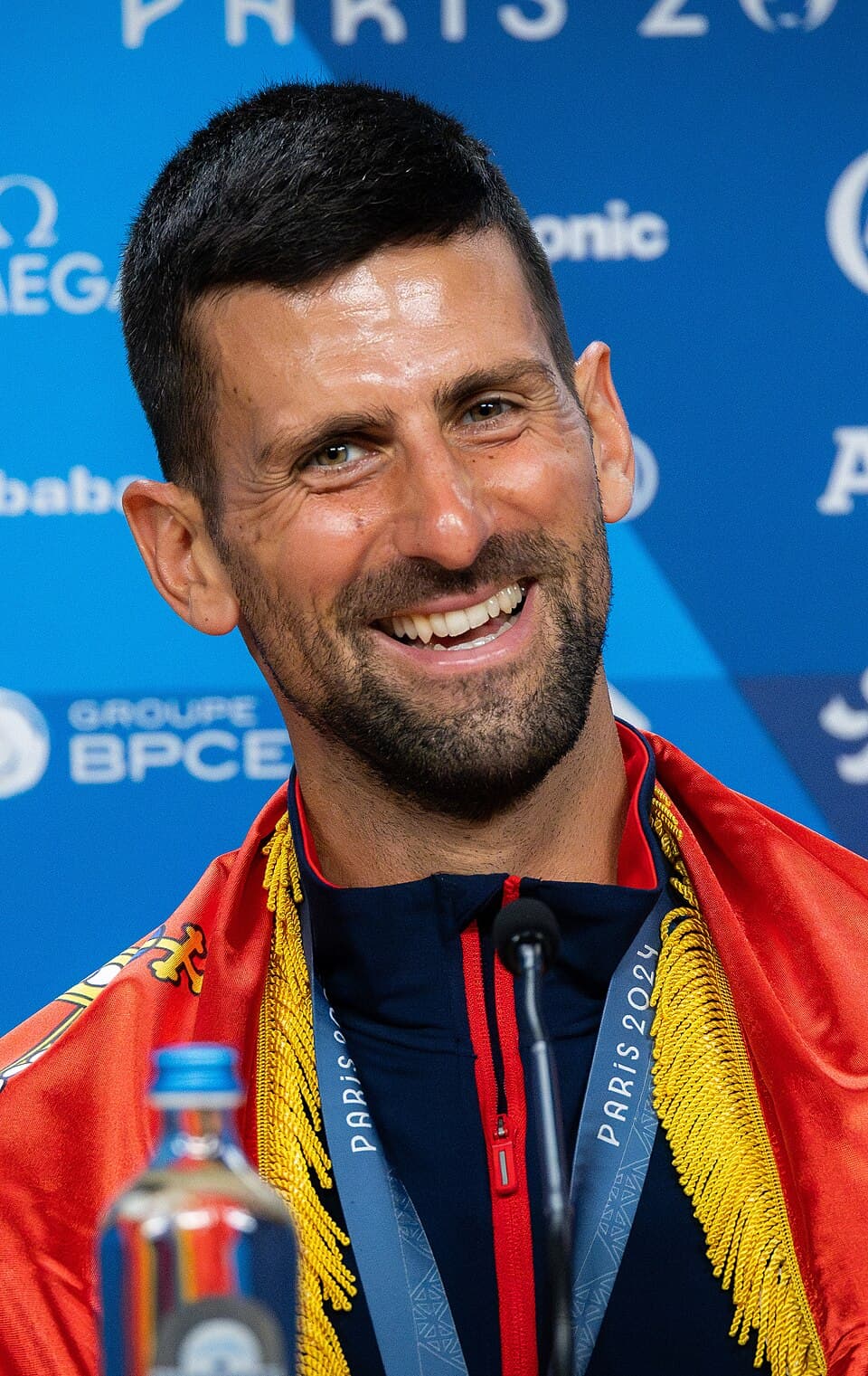
Novak Djokovic has used the release of his own Amazon Prime documentary to revisit the most polarising stretch of his career, saying flatly that he knew the cost of refusing the Covid-19 vaccine and has made peace with paying it.
"I never said I'm for or against vaccines. I stood by what I believe in — the freedom to choose what enters my body," Djokovic says in the film. "I lost Grand Slams and didn't play in the USA for years because of this. It's okay, I paid the price."
The remarks come from "Novak Djokovic: The Wolf in Winter," a 92-minute feature directed by Jason Hehir — the filmmaker behind Michael Jordan's "The Last Dance" — which premiered worldwide on Prime Video on Thursday, 20 August.
The documentary devotes a significant chunk of its runtime to the saga that defined Djokovic's 2022: his deportation from Australia on the eve of the Australian Open after his vaccine exemption was challenged and his visa revoked, a saga that also cost him entry to the United States and, with it, the US Open and other American tournaments for an extended period.
Djokovic has told the story before, but rarely with the same tone of resignation. Speaking to the BBC in the past he insisted, "I was never against vaccination but I've always supported the freedom to choose what you put in your body," a line that echoes almost word for word what he says in the new film.
The documentary features interviews with, among others, Rafael Nadal, Andre Agassi, Pete Sampras, Boris Becker and Jim Courier, alongside Djokovic's wife Jelena and members of his family, offering what the production describes as unprecedented access to a player who has often kept the press at arm's length on the subject.
Djokovic, now 39, used the same conversation to push back on any suggestion that his career is winding down. "Why would you want me to retire when I'm still competing at the highest level? I'm still top five in the world," he said, pointing to a run of six semi-final-or-better finishes in his last seven Grand Slam appearances.
The film does not shy away from the messier details of the episode — including the backlash after Djokovic was found to have breached isolation rules following his positive Covid test in December 2021, and the scrutiny over an interview he gave shortly afterward. But its central thread, in Djokovic's own words, is that he weighed the cost of his stance against his principles and chose the latter, tournament results included.
Three and a half years on from the Melbourne deportation, Djokovic remains one of the sport's dominant figures, still ranked inside the world's top five and still chasing majors as he heads toward the end of a career that has already delivered 24 Grand Slam singles titles.