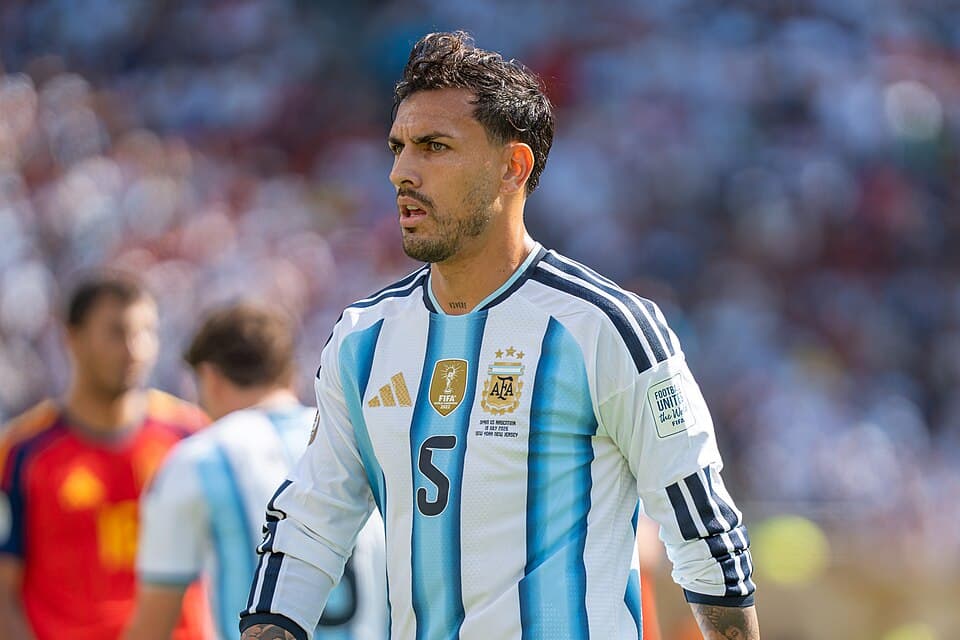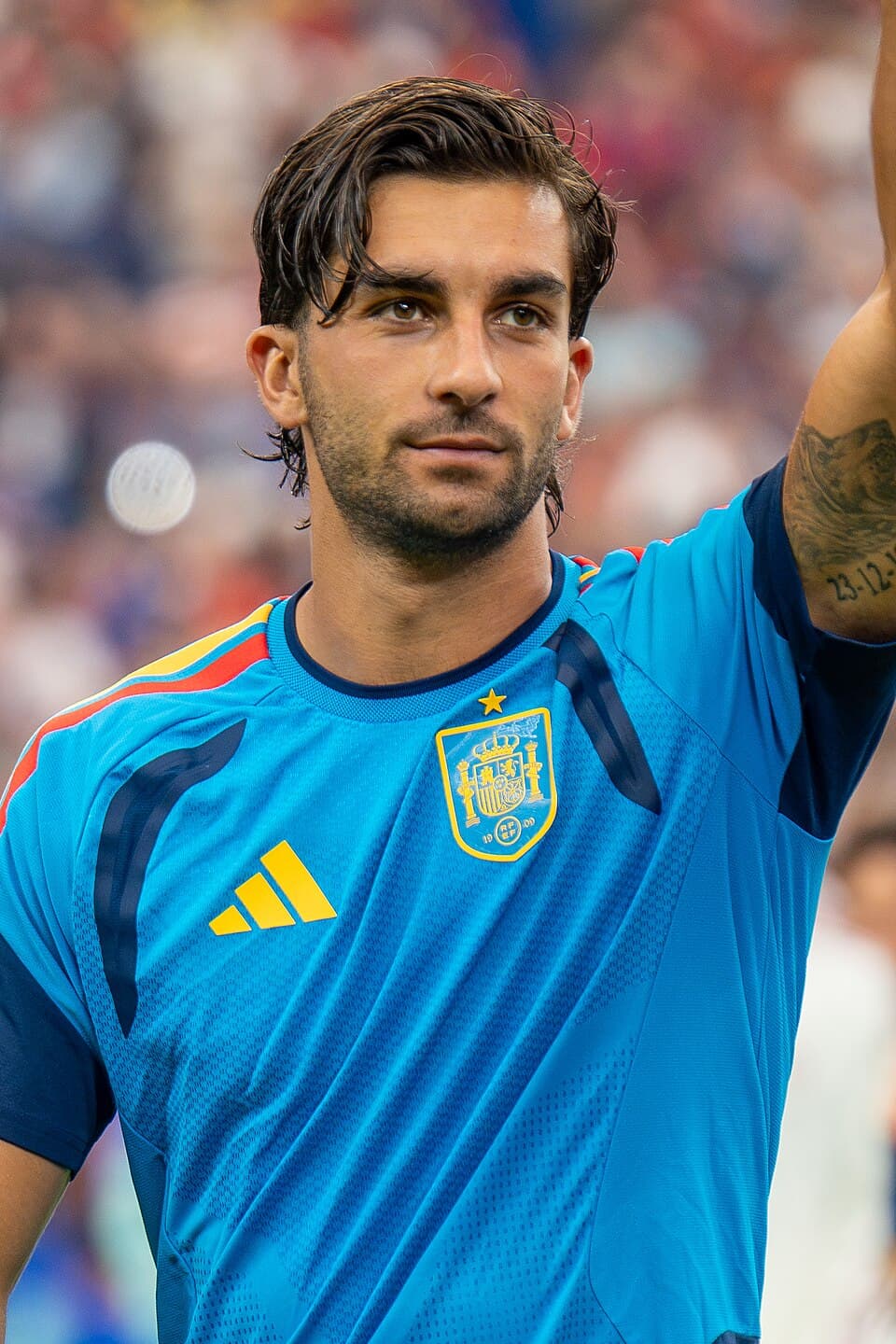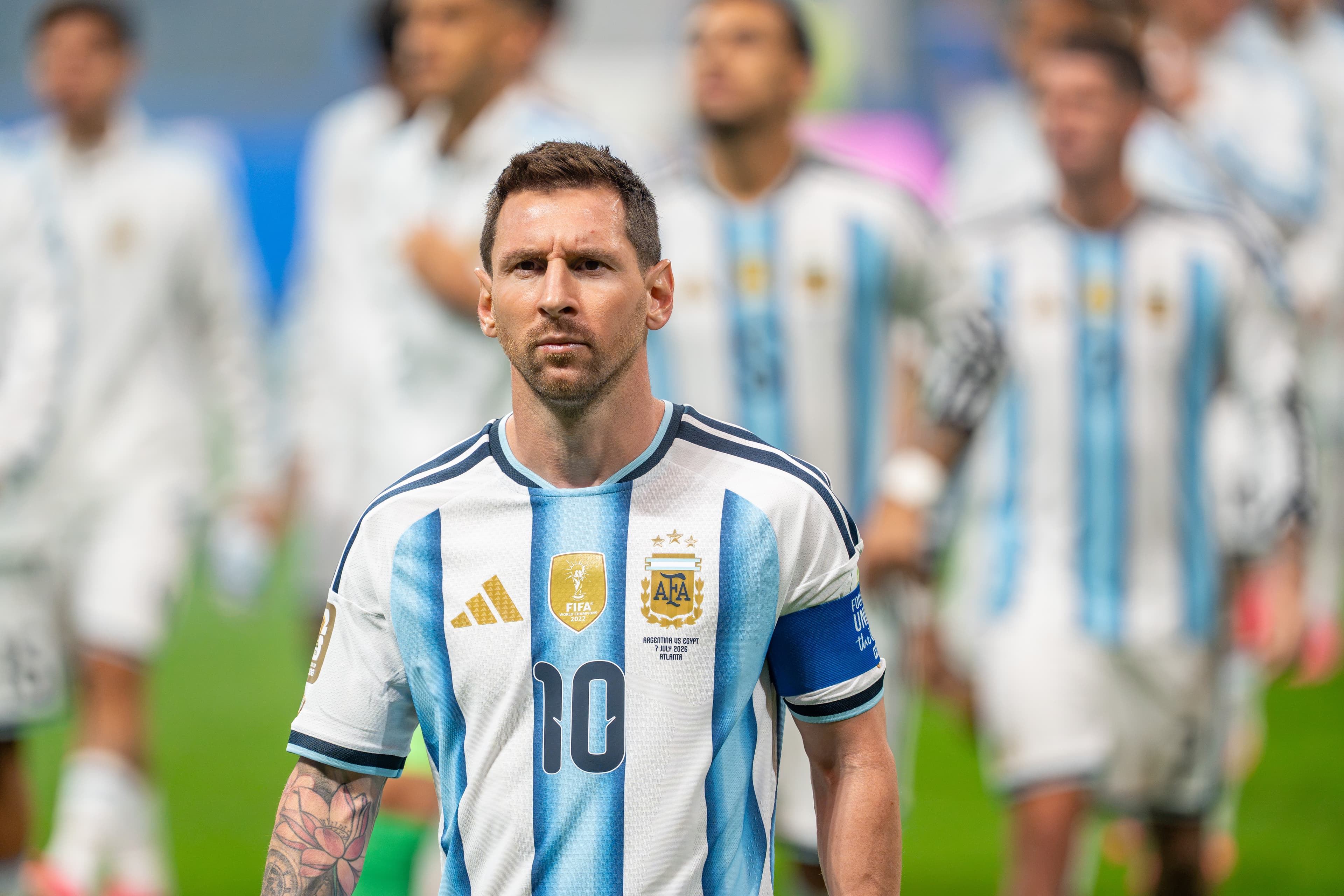
If Lionel Messi starts Sunday's World Cup final against Spain, he will join Cafu as only the second man to play in three men's finals. That is the clean historical fact. The more interesting story is what the comparison cannot show, because Cafu's record describes an elite body and mentality surviving across three Brazilian teams, while Messi's prospective equaliser describes a footballer repeatedly redesigning his influence as the speed available to him changed.
Cafu's sequence remains singular. He replaced the injured Jorginho during the 1994 final against Italy, started the 1998 defeat by France, and captained Brazil to victory over Germany in 2002. The role evolved from understudy to established full-back to leader, but the essential proposition stayed recognisable: relentless width, recovery running, and the capacity to repeat high-intensity actions along the same touchline.
Messi's three versions are less alike. In 2014 he was still the devastating carrier around whom Argentina compressed its attack, reaching the final before Germany won in extra time. By 2022 his game contained fewer long accelerations but more control over when a match accelerated, and he scored twice in the final, converted in the shootout and finally won the trophy after the 3–3 draw with France.
The 2026 version has moved further towards selection and timing. Messi enters the final with eight goals, yet the semi-final against England turned on his passing rather than his scoring.
With Argentina trailing late, he created Enzo Fernández's equaliser after a short corner and then supplied the cross from which Lautaro Martínez headed the winner. Those were his third and fourth assists of the tournament, enough to move him ahead of Kylian Mbappé on the Golden Boot tiebreak without taking a shot that changed the score.
Three final appearances can look like a single continuous achievement when presented in a record book. In reality, the intervals are the point. Twelve years separate Maracanã in 2014 from East Rutherford in 2026, long enough for opponents to replace entire generations and for the sport's pressing structures to change around him.
Messi has not merely held a place while the scenery changed. He has had to find a different answer to the same question: where can his first touch still damage the best team left in the tournament?
This is where longevity becomes too passive a word. Remaining present at 39 is an achievement; remaining structurally useful is the greater one.
Argentina no longer ask Messi to dominate every metre between halfway and the penalty area. They need him to recognise the five seconds when a defensive block loses shape, receive in the right lane and choose a pass before the space closes. The burden has narrowed, but its value has not.
The England comeback also showed the protection built around that model. Fernández could finish from distance, Martínez could arrive from the bench to attack the decisive cross, and Argentina could survive long stretches without Messi constantly manufacturing progression. That is not evidence that he has become incidental — it is evidence that the holders have built a team capable of preserving his decisive actions rather than exhausting them.
There is a cost to that accommodation, and pretending otherwise turns analysis into tribute. Argentina must decide when Messi joins the press and when the rest of the side closes the space for him. They must create width without asking him to make repeated recovery runs, and they must still progress the ball when opponents deny the central pocket he prefers. The bargain works only while ten other roles remain coherent, and England nearly broke it for 84 minutes before Argentina found two moments of clarity.
Spain will make the distinction severe. The European champions reached the final by beating France 2–0 and have the technical confidence to keep Argentina away from the ball. Messi cannot solve that problem through reputation or record accumulation; he will need teammates to recover possession, carry the game through pressure and place him where one action can matter. A third final appearance would therefore belong to the whole architecture around him as much as to the number on his back.
Cafu's three finals should not be reduced to a rung on somebody else's greatness ladder, and Messi's possible third should not become another automatic verdict in an argument that never ends. The better reading is about adaptability. Cafu made repetition historic; Messi is approaching the same landmark through transformation. Argentina's reward is not simply that their greatest player lasted — it is that he learned how to remain decisive after the game stopped allowing him to be the player he once was.