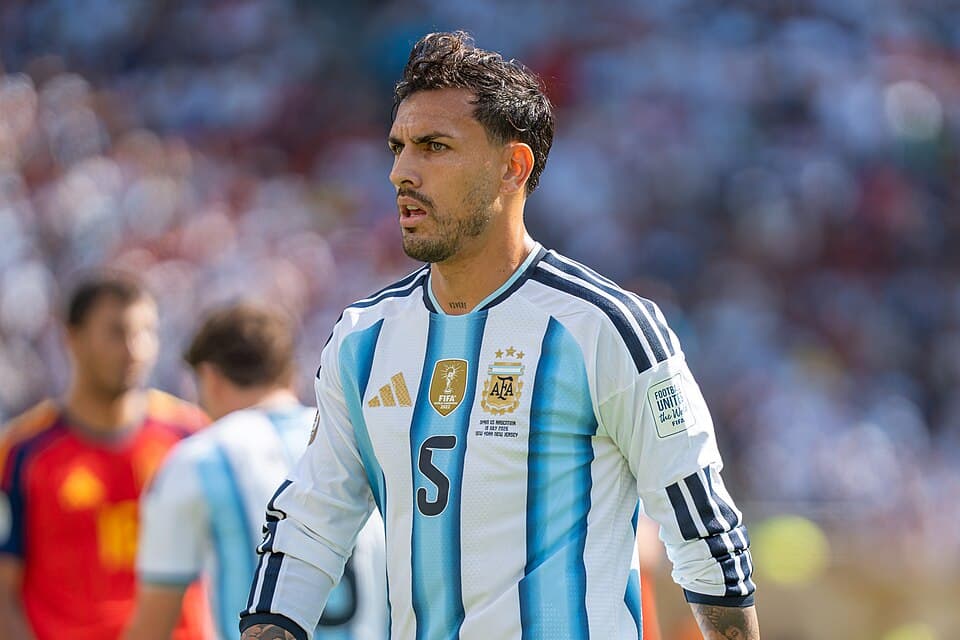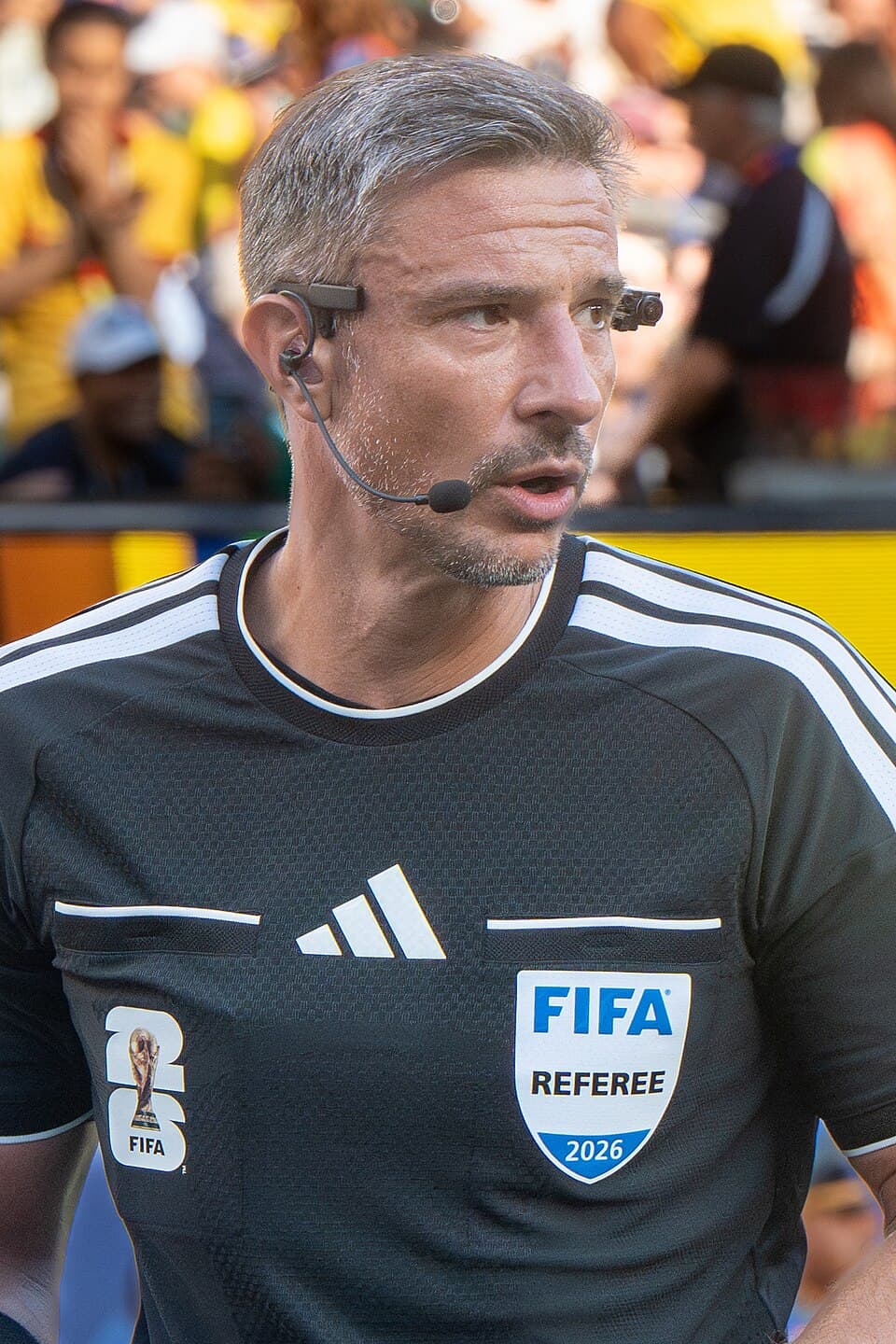
Slavko Vinčić will referee Sunday’s World Cup final between Argentina and Spain at New York New Jersey Stadium. The appointment gives the 46-year-old Slovenian his fourth match of the tournament and places one of European football’s most experienced officials in charge of the game that will decide the world title.
Vinčić will work with Slovenian assistant referees Tomaž Klančnik and Andraž Kovačič. Jordan’s Adham Makhadmeh has been named as the fourth official, with compatriot Mohammed Al-Khalaf serving as reserve assistant referee. The five-man on-field group combines an established Slovenian trio with two Jordanian officials for the final assignment.
This will be Vinčić’s second men’s World Cup. He refereed Argentina’s 2–1 group-stage defeat by Saudi Arabia and Wales’ 2–0 win over Iran in Qatar in 2022. His previous experience with Lionel Messi’s team therefore comes from one of the defining shocks of that tournament, although that historical result supplies context rather than any evidence about how Sunday’s final will be handled.
Vinčić has already taken charge of three games at the 2026 tournament: Brazil’s draw with Morocco, Jordan against Algeria and Mexico’s round-of-32 victory over Ecuador. The last of those included Piero Hincapié’s dismissal. Sunday will be his first appearance since that knockout assignment and his first World Cup final as the referee in the middle.
The scale of the occasion is familiar from club football. Vinčić controlled Real Madrid’s 2–0 win over Borussia Dortmund in the 2024 Champions League final at Wembley. He also refereed the 2022 Europa League final between Eintracht Frankfurt and Rangers in Seville, which Frankfurt won on penalties. UEFA’s official record lists him as an international referee since 2010.
Klančnik and Kovačič were also Vinčić’s assistants at the 2024 Champions League final, giving the Slovenian trio experience together in a comparable one-match showpiece. That continuity is a functional advantage rather than a guarantee of an error-free night: positioning, eye contact and concise radio communication all depend on rehearsed habits when the noise and speed of a final compress decision time.
For Argentina and Spain, the practical significance lies in preparation rather than mythology around past results. Teams use an official’s recent matches to study thresholds for contact, dissent, advantage and time management. Vinčić’s established assistants matter equally: offside decisions and communication across the crew can shape a final long before a major disciplinary call reaches the referee.
Argentina and Spain are scheduled to kick off at 3pm local time on Sunday 19 July. The referee appointment completes another central part of the match operation as both finalists move into their last training days. Vinčić’s task is straightforward to describe and uniquely difficult to execute: keep the world’s largest football match moving, apply the laws consistently and make the officials as secondary to the contest as the contest allows.