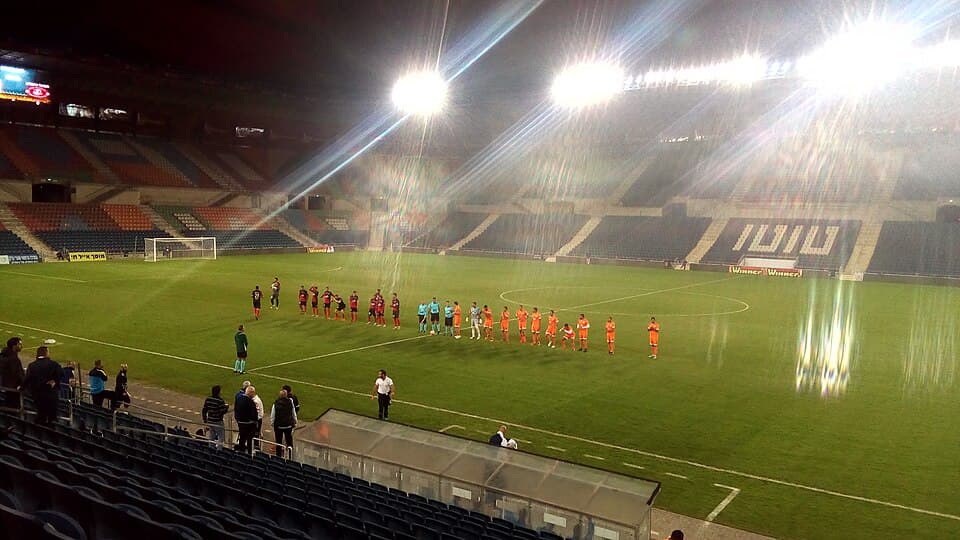
Hapoel Rishon LeZion kicked off its summer not with a marquee signing but with more than a hundred children and teenagers on the training pitch, in what the club is presenting as the first real step of a rebuilt youth strategy, ONE reported.
The Liga Leumit club's youth department ran a summer training camp for close to 100 boys and girls, split into small groups and worked through stations covering technique, finishing, individual tactics and pressing games, alongside coordination and physical conditioning.
Ophir Kupel, the department's professional manager, said the camp was run "at the highest professional level, with the department's best coaches," with close attention paid to technical detail, physical work and team play. Alongside the football work, players sat in on enrichment sessions covering nutrition, mental resilience and a broader sporting lifestyle.
Arik Ben Yididya, the department's administrative manager, organised the camp together with Kupel — part of a push the club says goes beyond one summer session.
ONE frames the camp as the visible face of a larger commitment: an advanced football academy the club is investing in financially, built on the idea that Hapoel Rishon LeZion's route forward runs through developing its own players rather than leaning on a wealthy owner to buy success.
That framing lines up with where the club sits: Hapoel Rishon LeZion currently play in Liga Leumit, Israel's second tier, and are chasing promotion back to the top flight. A functioning academy pipeline would let the club develop players internally rather than relying solely on transfer budgets it does not have.
A separate notice from the youth department, carried by local outlet BE106, listed the preparatory camp as running from July 12 to July 28 — consistent with the timing of the camp described by ONE.
Alongside the football curriculum, the club says it is building the program around values like self-confidence, discipline, teamwork and friendship — the kind of framing clubs increasingly use to sell academy places to parents, but one that also reflects a genuine shift in resourcing toward the youth ranks.