For fifty-two years, Israel had gone to the Olympics and come home with silver and bronze — never gold. That changed on the afternoon of 25 August 2004, on a stretch of chop off Agios Kosmas outside Athens, where a 28-year-old windsurfer named Gal Fridman sailed the last, decisive race of the Mistral One Design class with the coolest head on the water.
Fridman had been here before, in a sense. Eight years earlier, at Atlanta in 1996, he had won bronze in the same event, becoming one of only a handful of Israelis to reach an Olympic podium at all. He missed Sydney 2000 entirely, failing to win his own country's Olympic trials. By 2003 he had rebuilt himself into the world's top-ranked sailor in the class, world champion the year before in Pattaya, Thailand — and arrived in Greece as a genuine gold-medal contender.
The Mistral regatta ran eleven races over more than a week, and Fridman sailed with the discipline of a man who understood a title is rarely won in one afternoon: he never finished worse than eighth in a fleet of more than thirty boards. Going into the final race, the destiny of the gold hinged on split-second decisions among three sailors — Brazil's Ricardo Santos, who led the standings, Greece's Nikolaos Kaklamanakis, the defending Sydney champion who had lit the Athens Games' Olympic cauldron at the opening ceremony, and Fridman himself.
Santos faltered off the start, and Kaklamanakis made a tactical misjudgment that let Fridman surge past him on the course. Fridman crossed the line second in that final race — enough, on the regatta's cumulative low-points scoring, to finish the series with 42 net points overall, ahead of Kaklamanakis's 52 and Britain's Nick Dempsey, who won the medal race itself and took bronze on 53. Gold, for the first time in the state of Israel's history, belonged to an Israeli.
"I feel like I'm in a dream. An entire country was pushing me," Fridman said afterward, in remarks carried by the Christian Science Monitor. His coach, Gur Shternberg, put it more bluntly: "We've shown that Israelis too can win in the world."
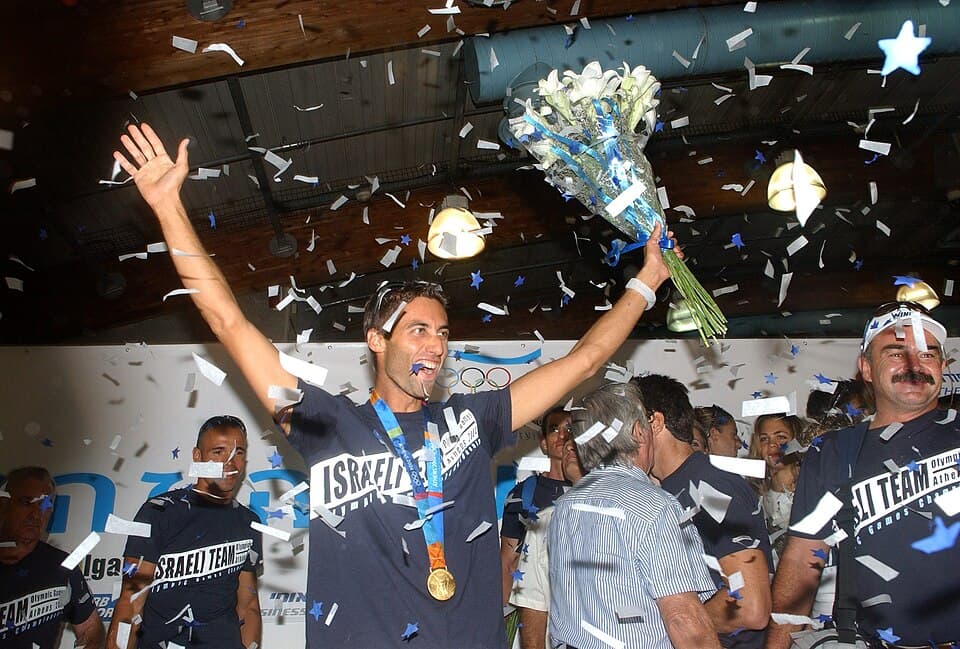
The medal ceremony carried a weight beyond sport. As Fridman stood on the top step of the podium, Hatikva — Israel's national anthem, its title meaning "The Hope" — was played at an Olympic Games for the first time in the country's history, with Fridman and dozens of Israeli supporters in the crowd singing along, according to Haaretz's coverage of the day. It was, in the most literal sense, a first: 56 years after independence and a dozen years after Yael Arad had won Israel's first-ever Olympic medal, a judo silver in Barcelona in 1992, an Israeli voice was finally being heard from an Olympic summit.
Fridman made sure the moment also looked backward. He dedicated the gold medal to the memory of the eleven Israeli athletes and coaches murdered by Palestinian gunmen at the 1972 Munich Olympics, a connection widely reported at the time, including by the Wall Street Journal, which noted the medal arrived three decades almost to the anniversary of that massacre.
News of the win reached Jerusalem within minutes. Israeli President Moshe Katsav and Prime Minister Ariel Sharon both telephoned Fridman to congratulate him, and Education, Culture and Sport Minister Limor Livnat flew out to Athens in time for the medal ceremony — an unusual show of official attention for a sport that, before that week, few Israelis had thought much about.
Fridman's achievement also reframed a broader Olympic story. Since Israel's Olympic debut at Helsinki in 1952, the country had accumulated just a handful of medals — one silver and three bronzes by the time the Athens Games began — and none of them gold. A single race off a Greek beach changed the ledger permanently: Gal Fridman remains, to this day, the only Israeli to have won Olympic gold, and the only Israeli to have won two Olympic medals of any color.
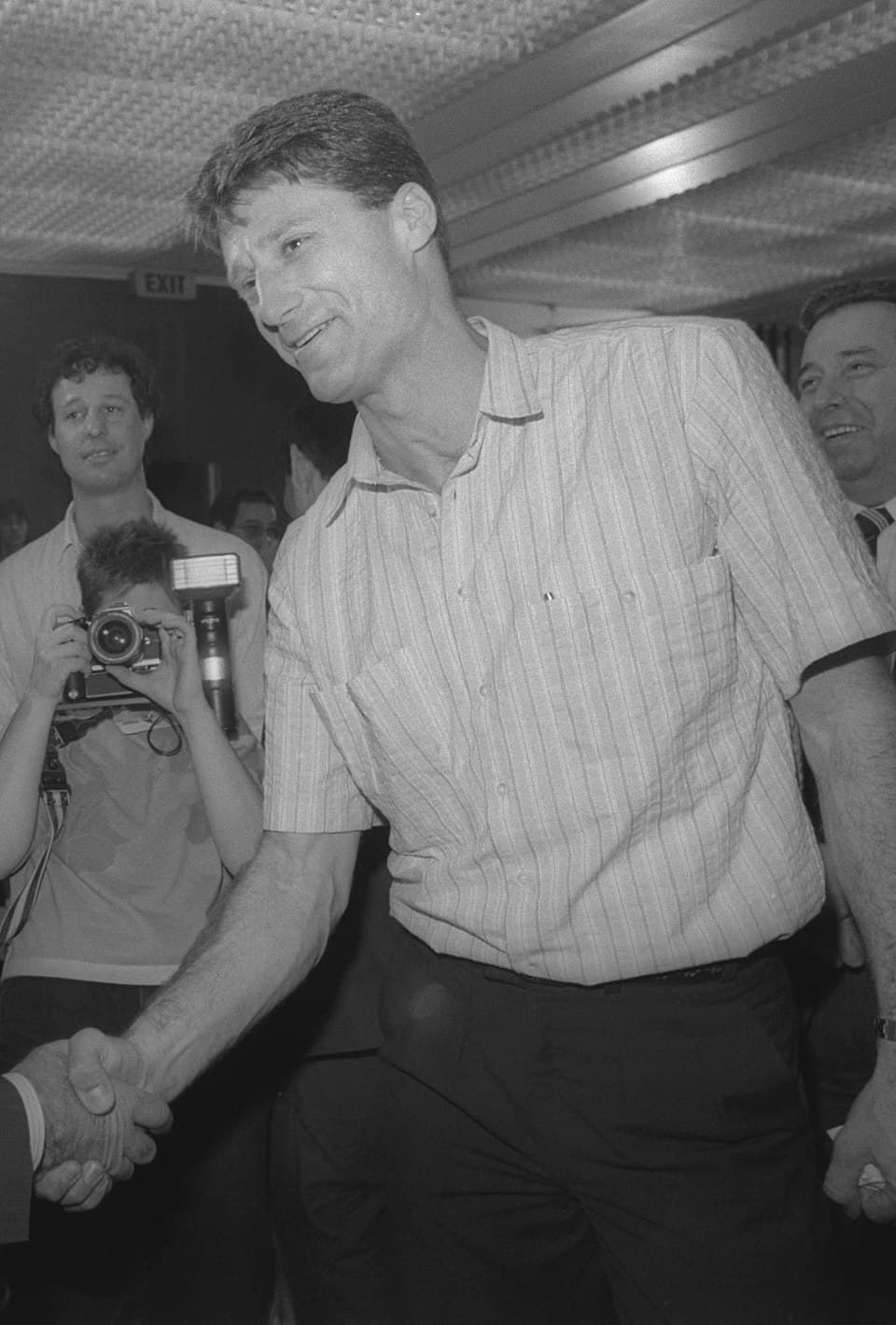
He returned home to a hero's welcome at Ben-Gurion Airport, where photographers captured him beaming beside fellow medalist, judoka Arik Ze'evi, and later at a reception hosted by Sharon, where the two shook hands over the medal that had, for one afternoon, made the world's smallest gestures on a sailboard feel like a matter of national identity.