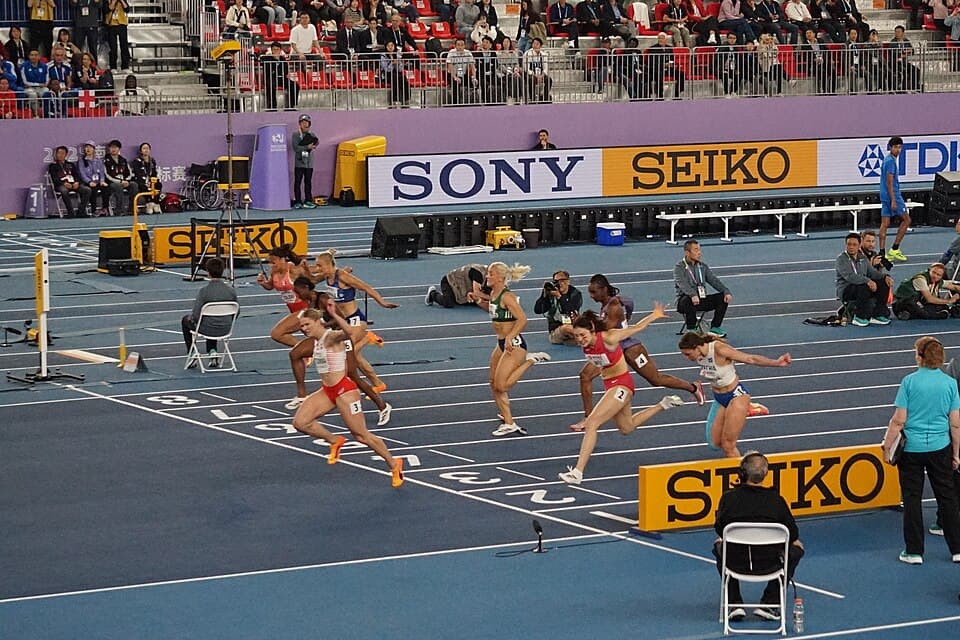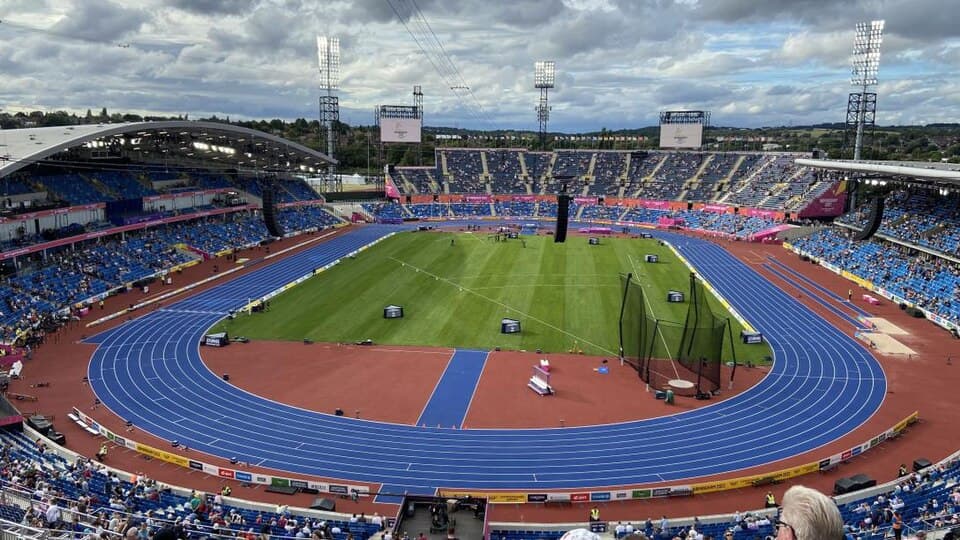
Gal Arad's bid to reach a European Championships semi-final ended in the cruellest way possible on Thursday, as the Israeli sprinter was eliminated from the men's 200m at Alexander Stadium in Birmingham by seven thousandths of a second.
Arad crossed the line in a hand-timed 21.02 seconds in his first-round heat, exactly matching the clock reading of Turkey's Deniz Kaan Kartal for what looked, in the moment, like a shared place on the qualifying line. Only one of them was going through.
Officials went to the full electronic timing to separate the pair, and it settled the argument by the barest of margins: Kartal was given 21.012, Arad 21.019. Seven thousandths of a second — the width of little more than a fingernail over 200 metres — put the Turkish sprinter into Thursday evening's semi-finals and sent Arad home from the event.
It is a brutal way to exit a championship for an athlete who arrived in Birmingham in the form of his career. Arad, 26, lowered his Israeli 200m mark to 20.63 seconds earlier this year while training in the United States under coach Vince Anderson, and had targeted a run inside his personal best to force his way through to the last 24.
According to ONE, the men's 200m first round proved unusually tight at the business end, with several sprinters, including Norway's Kenny Emi Tijani-Ajayi, going through to the semi-finals on personal-best or near-personal-best times. Italy's Filippo Dezza and Germany's Joshua Hartmann headed the overall qualifiers.
There was a fuller picture of Israel's day in Birmingham. ONE reported that discus thrower Estelle Velano finished 28th in qualifying with a best throw of 51.37 metres, well short of a place in the final, while steeplechaser Adva Cohen was due back on the track in the evening session for the women's 3,000m final, aiming to improve on the qualifying time of 9:37.15 that carried her through.
For Arad, there is no shortage of context to soften the disappointment. He has spent the past two years rebuilding his season around US collegiate-circuit training, chasing a place among Europe's sprint elite, and a time of 21.02 in a European Championships heat — even one that ended in elimination — is not far off the level that took him to that 20.63 lifetime best in April.
The margin that beat him, though, is the story: seven thousandths of a second, the kind of gap that exists only on paper and on the photo-finish frame, but which is entirely real when it decides who runs again and who packs up and goes home.